

60W PIR Motion Sensor for LED Strips: Auto On/Off
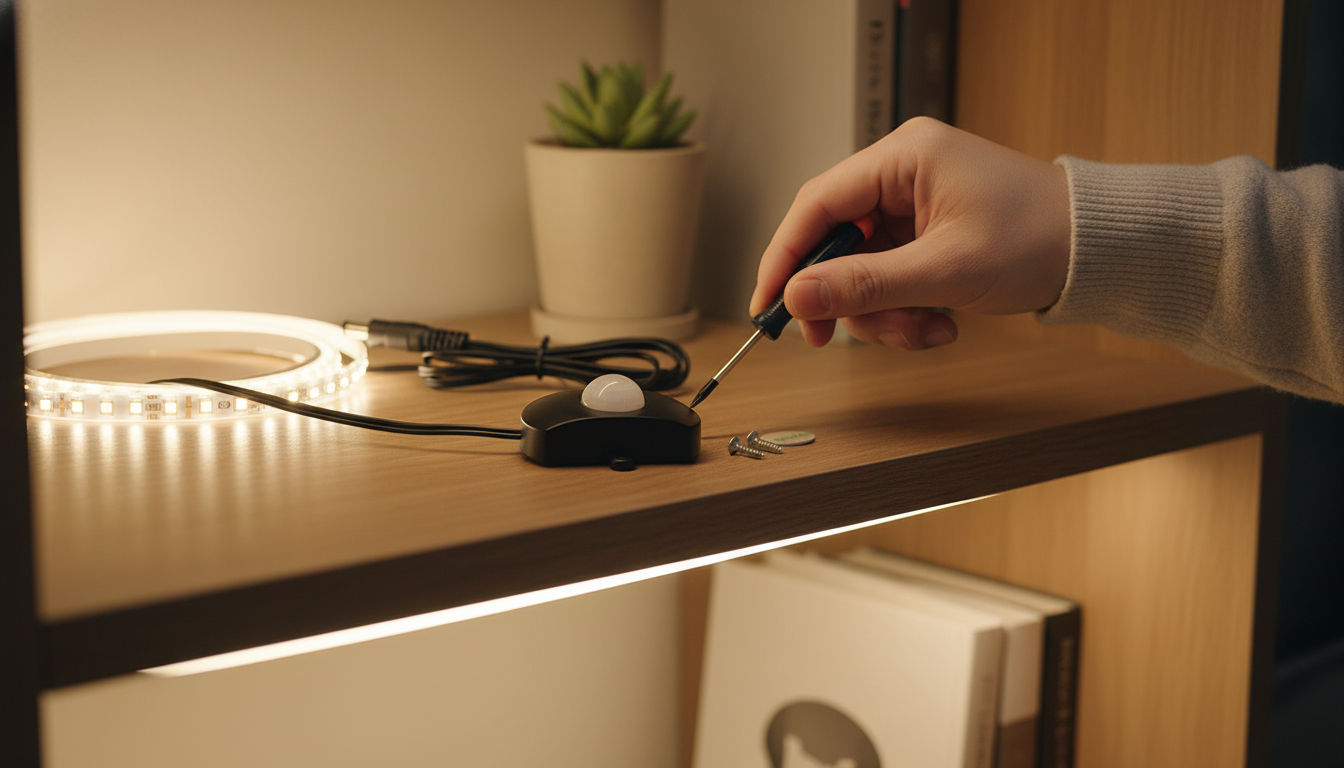
60W PIR Motion Sensor Switch for LED Strip Lights: Hands-Free Control for Safer, Smarter Lighting
A PIR motion sensor switch lets LED strip lights turn on automatically when movement is detected, then switch off after a set delay. It’s a small add-on that can make a big difference in hallways, closets, under-cabinet lighting, stair steps, and entryways—cutting wasted power while improving convenience and nighttime safety. If you’ve ever walked into a dark closet with full hands or navigated stairs half-awake, motion-activated strips can feel like a real quality-of-life upgrade.
What a PIR Motion Sensor Switch Does
PIR (passive infrared) sensors “watch” for changes in infrared heat, which is why they detect people (and sometimes pets) moving through the sensing area. In a typical low-voltage LED strip setup, the sensor switch acts like an inline gatekeeper: it allows power to pass to the LED strip when motion is detected and stops power after the delay time expires.
- Detects infrared heat changes from people (and some pets) moving within its sensing area.
- Switches LED strip lighting on automatically, then off after a delay time.
- Acts as an inline control between the power supply and the LED strip (typical low-voltage LED strip setups).
- Helps avoid fumbling for switches in dark areas like closets, pantries, garages, and stair landings.
Where It Works Best
Motion-activated LED strip lighting is most satisfying in “pass-through” spaces—areas where you want quick light without committing to a wall switch or pulling a chain.
- Closets and wardrobes: quick on/off without touching a wall switch.
- Under-cabinet task lighting: automatic illumination when approaching the counter at night.
- Stairs and corridors: improves visibility and reduces trip risk.
- Entryways and mudrooms: lights greet movement and time out automatically.
- Bedside foot lighting: low-effort navigation without turning on bright overhead lights.
For efficiency context, LED lighting is already a low-energy option compared with older technologies, and automatic off control can reduce the “left on by accident” problem—especially in closets and mudrooms. For general LED efficiency basics, see ENERGY STAR lighting guidance and the U.S. Department of Energy overview of LED lighting.
Key Specs to Check Before Buying
Before choosing a PIR switch, confirm a few practical specs so your sensor behaves predictably and runs cool.
- Power rating (watts): sensor switch capacity must be equal to or higher than total LED strip wattage.
- Voltage compatibility: match the switch to the LED strip system voltage (commonly 12V or 24V DC for strips).
- Connector type and wiring style: verify input/output connectors or be ready to use adapters.
- Detection range and angle: choose based on placement (tight closet vs. open hallway).
- Delay time options: shorter for closets, longer for hallways or entryways.
- Ambient light control (if available): prevents turning on in bright daytime conditions.
Quick Fit Guide for Common LED Strip Setups
| Setup | Typical total load | Recommended switch capacity | Placement tip |
|---|---|---|---|
| Closet strip (1–2 m) | 5–20W | ≥20W | Mount sensor facing doorway to avoid false triggers |
| Under-cabinet run (2–5 m) | 15–60W | ≥60W | Angle sensor toward approach path, not toward stove/heat sources |
| Hallway/stairs accent | 10–60W | ≥60W | Avoid pointing directly at HVAC vents or moving curtains |
| Garage shelves/workbench | 20–60W | ≥60W | Position away from direct sunlight to reduce nuisance switching |
Featured Product: 60W PIR Motion Sensor Switch for LED Strip Lights
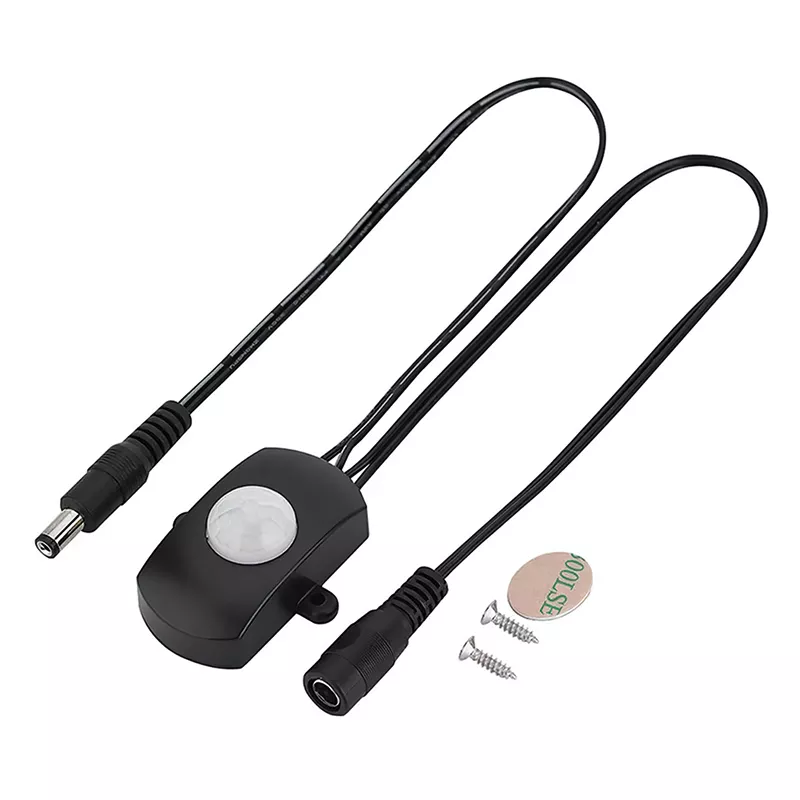
If you want motion activation without redoing your lighting plan, the 60W PIR Motion Sensor Switch for LED Strip Lights is designed to add hands-free on/off control to LED strips up to a 60W total load. It’s a practical way to turn “always-on” accent strips into lighting that only runs when it’s actually needed.
- Designed to add motion-activated control to LED strip lighting up to 60W total load.
- Useful for turning always-on accent strips into automatic, energy-conscious lighting.
- Compact add-on for DIY lighting upgrades in living spaces and utility areas.
- Best practice: keep total LED strip wattage below the switch’s maximum rating for cooler operation and longer life.
Installation Overview (Typical Inline Setup)
Most low-voltage LED strip systems are simple: a DC power supply feeds a strip (sometimes through a controller). A motion sensor switch is typically installed inline so it can control when power reaches the strip.
If you’re selecting components for a permanent install, prioritize properly rated equipment and reputable safety certification practices. For a high-level overview of standards and certification, see UL Solutions.
Placement and Tuning Tips to Reduce False Triggers
Safety and Compatibility Notes
More In-Stock Picks
- The Anxiety Relief Bundle: A Path to Calm | 4-in-1 Bundle | Mindfulness Exercises, Positive Thinking, Printable Checklist & Course Outline
- Armani Exchange Men’s Printed Black Trousers
FAQ
Will a PIR motion sensor switch work with dimmable LED strip lights?
Usually, a PIR motion sensor switch is an on/off power switch rather than a dimmer. Compatibility depends on how your dimmer/controller is designed; many setups work best when the sensor is placed before the LED controller, as long as the voltage and wattage limits are respected.
What wattage rating should a motion sensor switch have for LED strips?
Add up the total strip wattage (watts per meter × total meters) and choose a motion sensor switch rated above that number. Leaving about 20–30% headroom can help with reliability and cooler operation.
Why does a PIR sensor sometimes turn the lights on when nobody is there?
Common causes include warm airflow from HVAC vents, direct sunlight patches, nearby heat sources, reflective surfaces, or pets moving through the detection zone. Re-aiming the sensor, mounting it more securely, and adjusting delay time typically reduces nuisance switching.













Leave a comment