Is It a Women’s Button-Up? 5 Fit and Detail Checks
How to tell if it’s a women’s button up?
Start with the label, but don’t stop there. Many shirts are unisex or sized differently by brand, so the most reliable clues are the cut, button placement, proportions, and how the shirt is designed to sit on the body.
Check the button placement
Traditionally, women’s shirts button left-over-right (buttons sewn on the left placket), while men’s button-ups button right-over-left. It’s a strong hint, but not a guarantee—some modern brands reverse this or use the same placket for all genders.
Look at the shape: waist taper and bust room
Women’s button-ups are often more contoured through the waist and may include shaping darts at the bust or back. If the shirt narrows noticeably at the midsection and then releases at the hips, that’s a classic women’s pattern. Men’s versions tend to hang straighter from the chest down.
Compare shoulder seams and sleeve fit
A women’s button-up typically has narrower shoulders and higher armholes for a closer fit, with sleeves that may be slightly slimmer. If the shoulder seam sits neatly at the shoulder point without drooping and the armhole feels more “hugged,” it’s likely designed for women.
Evaluate length and hem style
Many women’s button-ups are a bit shorter overall or have a hem meant to be worn untucked (often a gentle curved hem that hits around the hip). Men’s shirts are frequently longer with more shirt-tail coverage for tucking in. Also check the collar size: women’s collars may be smaller or softer in structure.
Use styling intent as the tie-breaker
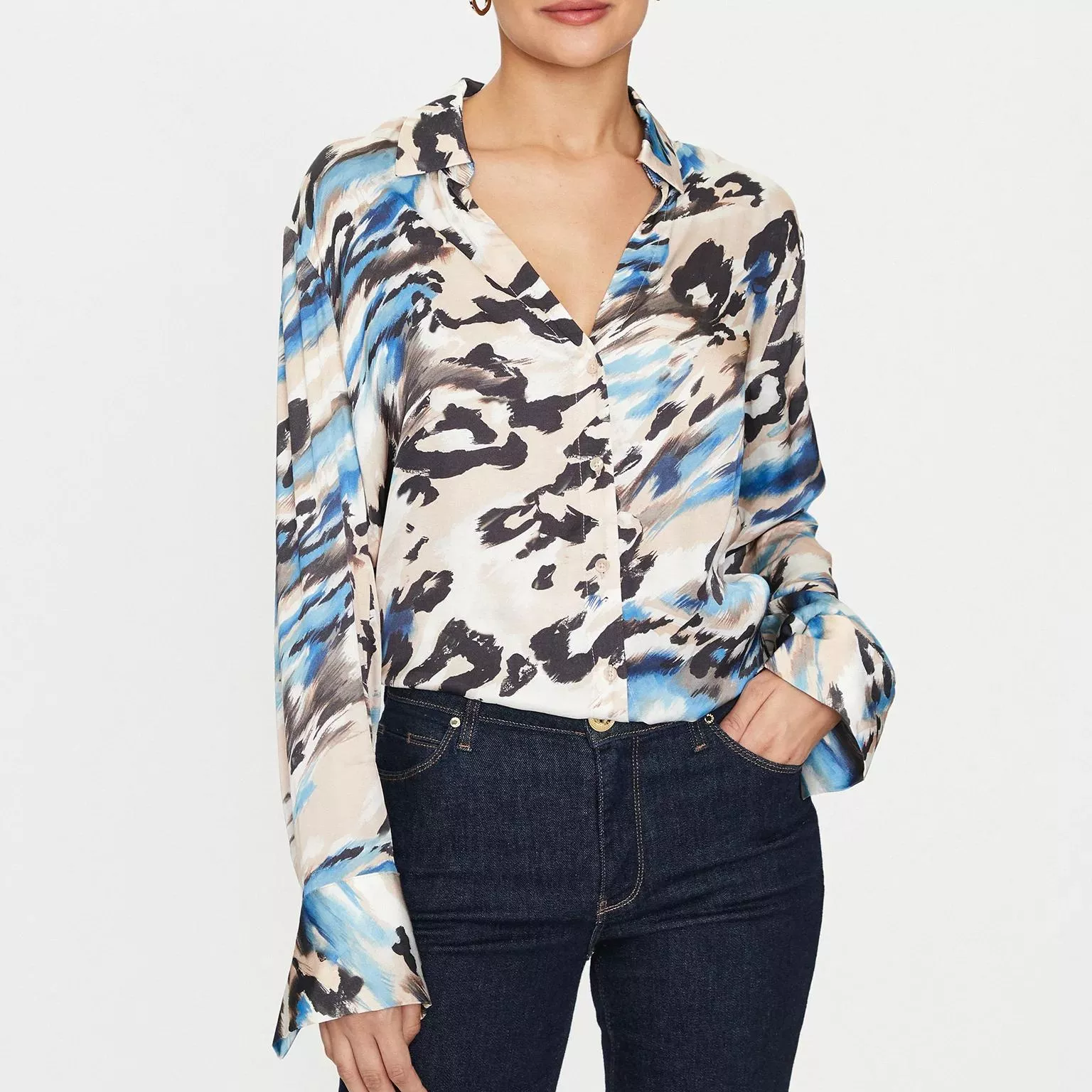
Details like slightly smaller buttons, lighter-weight fabrics, and a drape meant for layering under blazers or pairing with high-rise bottoms can signal a women’s style. For a practical example of how a blouse-like button-up transitions from office to off-duty outfits, see this guide to styling a beige button-up blouse.
FAQ
What’s the difference between a button-up and a button-down?
A button-up refers to any shirt that buttons up the front. A button-down is a type of button-up with collar points that fasten down with small buttons.











Leave a comment