

1000W Solar Portable Power Station: What It Can Run
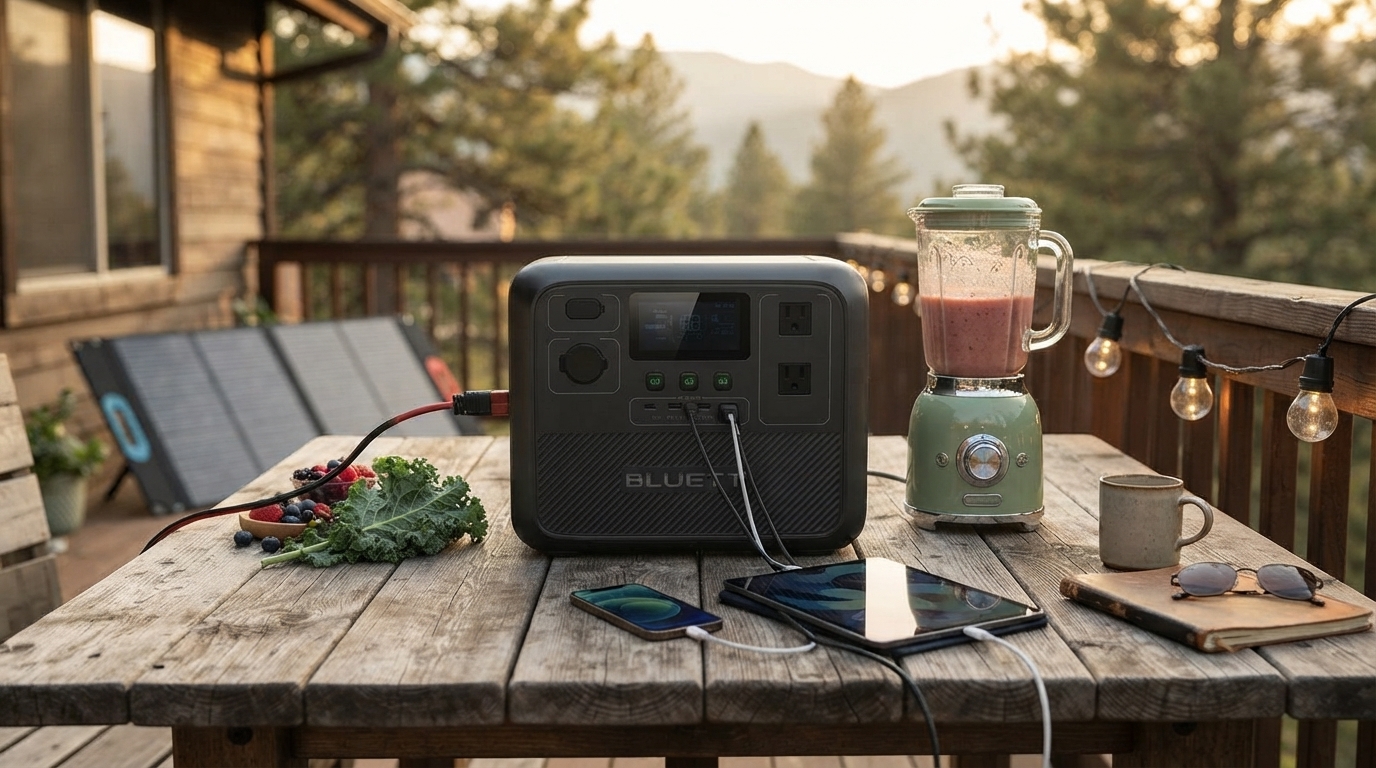
1000W Portable Power Station with Solar Charging
A 1000W portable power station with solar charging can keep critical electronics and small appliances running during outages, camping trips, road travel, and light job-site work. The best experience comes from matching real needs—battery watt-hours, inverter output and surge, charging speed, port selection, and safety features—with a solar setup that performs well in everyday sunlight (not just on a spec sheet). For more guidance, see Amazon.com: Durecopow Solar Charger Power Bank 20000mAh ….
What a 1000W portable power station can realistically run
A 1000W rating is a practical sweet spot for everyday essentials, but it’s not meant for high-draw heating devices. Think “electronics and efficient gear” rather than “anything with a hot coil.” For further reading, see Best Portable Power Stations – Consumer Reports.
- Designed for small appliances and electronics rather than high-draw heating elements.
- Good matches: laptops, routers/modems, CPAP machines (check surge), LED lighting, small fans, camera/drone chargers, small coolers, and power tools with modest startup loads.
- Less suitable: kettles, space heaters, hair dryers, large microwaves, and other resistive loads that often exceed 1000W or have high surges.
- Runtime depends more on battery watt-hours than the 1000W label; inverter efficiency and device cycling also matter.
Quick power and runtime planning examples
| Device | Typical draw (W) | Notes | Estimated runtime guidance |
|---|---|---|---|
| Smartphone charger | 5–20 | Varies by fast-charge profile | Many full charges; usually not a limiting load |
| Laptop | 45–100 | Higher during heavy use and charging | Several hours to a full workday depending on battery size |
| Wi‑Fi router + modem | 10–30 | Often continuous | Ideal backup load; long runtimes possible |
| LED light string | 5–50 | Brightness-dependent | Long runtimes; good for outage lighting |
| Mini cooler / 12V fridge | 30–80 avg | Cycles on/off; startup spikes possible | Overnight or longer if capacity is sufficient |
| CPAP | 30–90 | Heated humidifier increases draw significantly | Plan for overnight use; consider disabling heat for longer runtime |
| Power tool charger | 50–200 | Charging peaks then tapers | Fine for topping up packs; avoid simultaneous heavy loads |
Solar charging basics that affect daily energy harvest
Solar charging success is mostly about “usable input” and “real sunlight.” A panel’s advertised wattage is measured under ideal lab conditions; field output is often lower.
- Solar input is limited by the station’s maximum solar charge wattage and supported voltage/current range; panel wattage alone is not enough.
- Real-world panel output is often below its rating due to angle, temperature, haze, partial shading, and cable losses.
- For predictable results, size panels so typical midday output can cover essential loads and replenish daily usage.
- MPPT charge controllers generally improve harvest compared with PWM in variable light, especially mornings/afternoons.
- Placement matters: avoid shade, keep panels angled toward the sun, and re-aim during the day when possible.
For a deeper look at solar performance fundamentals, NREL’s solar resources are a helpful reference: https://www.nrel.gov/solar/.
Charging methods and what “fast enough” looks like
Most users rotate between three charging methods. The right mix depends on whether the goal is quick storm prep, steady off-grid replenishment, or keeping devices topped up during travel.
- AC wall charging: usually the fastest and most consistent; useful for rapid turnaround before travel or storms.
- Car charging: convenient but typically slower; best for maintaining charge between stops rather than fully replenishing quickly.
- Solar charging: best for off-grid use; plan around daylight hours and weather variability.
- Pass-through charging: useful for continuous loads, but heat and battery cycling can increase wear; follow manufacturer guidance.
- A practical target: the ability to recharge a meaningful portion of capacity in a single day of good sun with an appropriately sized panel array.
Ports, outputs, and protections to look for
Two power stations can share a “1000W” label and feel completely different in daily use. The difference often comes down to ports, surge handling, and protections that keep both the unit and your devices safer.
- AC outlets: check continuous wattage and surge rating; motors and compressors can spike above their running watts.
- USB-C Power Delivery: important for modern laptops/tablets; confirm maximum PD wattage.
- 12V DC output: helpful for car fridges, inflators, and certain routers; verify amperage limits.
- Protections: over-voltage, over-current, over-temperature, and short-circuit protection reduce risk to devices and the power station.
- Display and controls: clear input/output watt readouts make load management much easier in an outage or camp.
Battery chemistry, lifespan, and storage habits
Battery chemistry influences cycle life, heat tolerance, and how the unit behaves when stored for long periods.
For an overview of battery testing and safety standards, UL Solutions provides useful background: https://www.ul.com/services/battery-testing.
How to choose the right portable power station with solar charging
Setup tips for better solar performance and quieter nights
FAQ
Can a 1000W portable power station run a refrigerator?
Yes for many small refrigerators, but you’ll need to confirm both the running wattage and the startup surge, which can be several times higher when the compressor kicks on. Also estimate daily energy use because cycling behavior largely determines how long the power station lasts.
How many solar panels are needed to charge a portable power station?
It depends on the battery capacity, the station’s maximum solar input and voltage range, and your sun conditions. A practical approach is to size panels so good midday sunlight can get close to the unit’s solar input limit while staying within its electrical specifications.
Is it safe to use a portable power station indoors during an outage?
Generally yes because it produces no exhaust, but it should be kept in a ventilated area to manage heat and positioned away from flammable materials. Solar panels should be placed outside, and you should follow the manufacturer’s operating and charging instructions.













Leave a comment