

Stainless Manual Meat Grinder: Suction + Clamp Stability
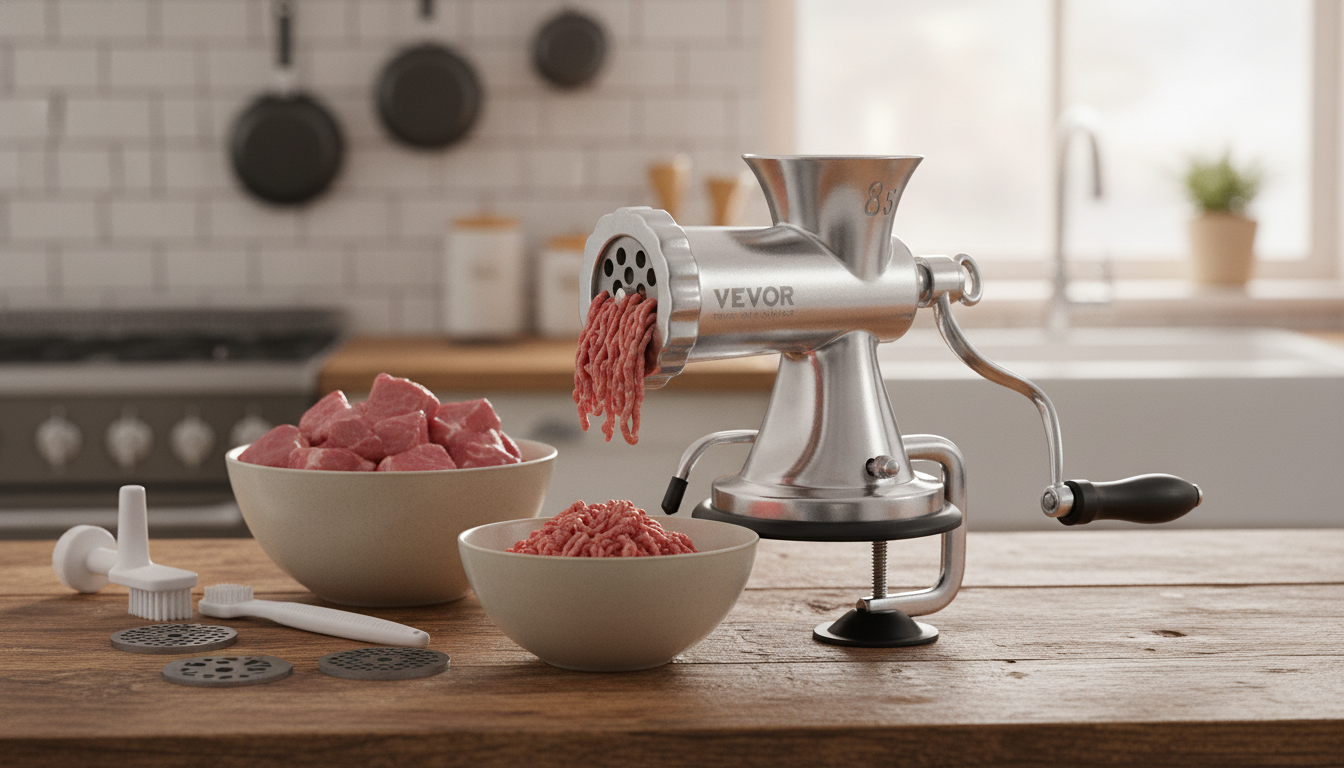
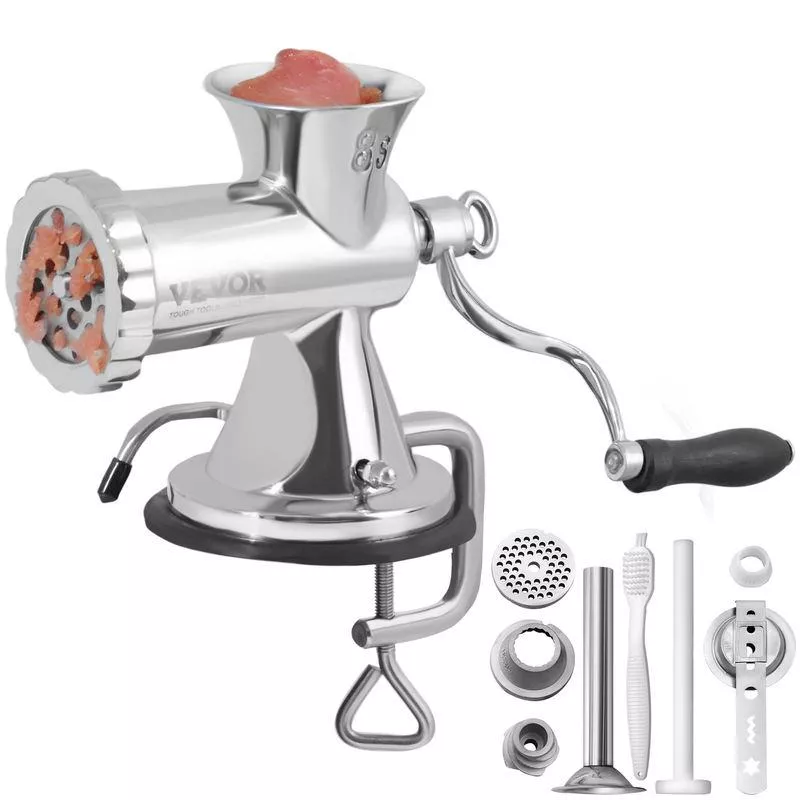
A sturdy manual grinder can turn fresh cuts into custom-ground meat, sausages, and fillings without relying on electricity. A 304 stainless steel body supports frequent use, while a dual base (suction cup and clamp) helps keep the grinder stable on different work surfaces—useful for small kitchens, camping setups, and quick batches where setup and cleanup matter.
What this style of grinder is built to do
A manual meat grinder is designed for control: you choose the cut, the fat ratio, and the texture. Instead of relying on motor speed, the auger and cutting set do the work at a pace you manage—handy when you want consistent results without pulling out a bulky appliance.
- Grind fresh meat for burgers, meatballs, dumplings, and kebabs with control over texture and fat ratio
- Support small-to-medium batches where an electric grinder would be bulky or unnecessary
- Enable add-ons like stuffing tubes (if included) for simple sausage making
- Handle other foods such as firm vegetables or cooked ingredients when cut into manageable strips
304 stainless steel: durability, hygiene, and flavor neutrality
When a grinder’s body and food-contact pathway are stainless steel, day-to-day maintenance gets simpler—especially if you grind frequently. 304 stainless steel is commonly used in food-contact tools because it resists corrosion well and is less likely to pick up odors or transfer a metallic taste compared with many plated alternatives. A smoother finish also helps ingredients move through the feed path with less sticking, particularly when meat is properly chilled.
- 304 stainless steel is widely used in food-contact tools for its corrosion resistance and reduced risk of metallic taste transfer
- Better tolerance for moisture and frequent washing compared with many plated or painted alternatives
- Helps maintain a smoother feed path when chilled meat is used, reducing sticking and smearing
- Look for solid, well-fitted joints and a consistent finish to avoid crevices that can trap residue
Key parts and what to look for during setup
| Part | Why it matters | Quick check before use |
|---|---|---|
| Hopper/feeding tray | Guides food safely into the auger | Edges are smooth; no wobble |
| Auger (worm) | Moves meat forward and builds pressure for cutting | Turns freely by hand; no scraping |
| Blade + grinding plate | Creates the final grind size and texture | Blade sits flat; plate holes are clean |
| Ring nut/cap | Holds cutting set firmly in place | Tighten snugly; avoid overtightening |
| Handle/crank | Leverage for steady grinding | Fastened securely; comfortable grip |
| Base (suction cup + clamp) | Prevents slipping during cranking | Suction seals; clamp grips without rocking |
Suction cup and clamp: getting stable on any counter
Stability is the difference between an easy grind and a frustrating one. A dual base gives you two ways to anchor the grinder, which matters because countertop materials vary widely in texture, thickness, and rigidity.
- Suction cups work best on smooth, non-porous surfaces such as sealed stone, glass, metal, or glossy laminate
- Clamps shine on thicker edges, butcher-block overhangs, and textured surfaces where suction may fail
- For maximum stability, combine both: set suction first, then secure the clamp to resist twisting force
- If slipping occurs, dry both the suction rim and countertop completely; a thin film of water can reduce grip on some materials
Grinding results: texture control and batch workflow
Manual grinding rewards a simple routine. Start cold, feed evenly, and keep pressure consistent so the blade can cut cleanly instead of squeezing fat through the plate.
- Chill meat and cutting parts (auger, blade, plate) to improve clean cuts and reduce smearing of fat
- Cut meat into strips or cubes sized to feed smoothly without forcing the plunger
- Use a steady cadence rather than fast cranking to keep pressure consistent and protect the cutting edges
- For finer texture, grind once through a coarse plate, chill briefly, then grind again through a finer plate if available
For food safety, keep raw meat cold and minimize time on the counter. The CDC’s four steps to food safety (Clean, Separate, Cook, Chill) are a solid baseline when you’re handling raw ingredients. If you’re grinding beef, follow time-and-temperature guidance from the USDA Food Safety and Inspection Service.
Beyond ground meat: practical kitchen uses
A manual grinder can earn its counter space even when you’re not making burgers. As long as ingredients are cut into manageable pieces and you clean promptly after sticky or oily foods, the auger-and-plate design can handle a range of prep tasks.
Cleaning and care for stainless steel grinding parts
If you’re comparing materials, stainless steel’s corrosion resistance is one reason it’s widely used for food equipment; for a general overview of properties, see the National Institute of Standards and Technology (NIST).
How to choose the right manual grinder for a suction/clamp setup
Common issues and quick fixes
Safe use tips for consistent results
FAQ
Does a suction cup base work on all countertops?
No—suction works best on smooth, non-porous surfaces like glass, metal, and glossy laminate. On textured, porous, or uneven counters, the clamp is typically more reliable; for suction, make sure both the rim and surface are completely clean and dry before re-seating.
How can a cleaner grind be achieved without smearing the fat?
Chill the meat and the cutting parts (auger, blade, and plate), then feed evenly sized pieces at a steady cadence. Confirm the blade sits flat against the plate, and for extra-clean texture, re-chill between passes when doing a double-grind.
Is stainless steel safe for food and easy to maintain?
304 stainless steel is commonly used for food-contact tools and is generally straightforward to care for. Disassemble promptly, hand-wash thoroughly, dry completely, and apply a light food-safe oil film to the blade and plate if storing for an extended period.















Leave a comment