

Choosing the Right Dog Car Seat Cover Size: Easy Fit Guide
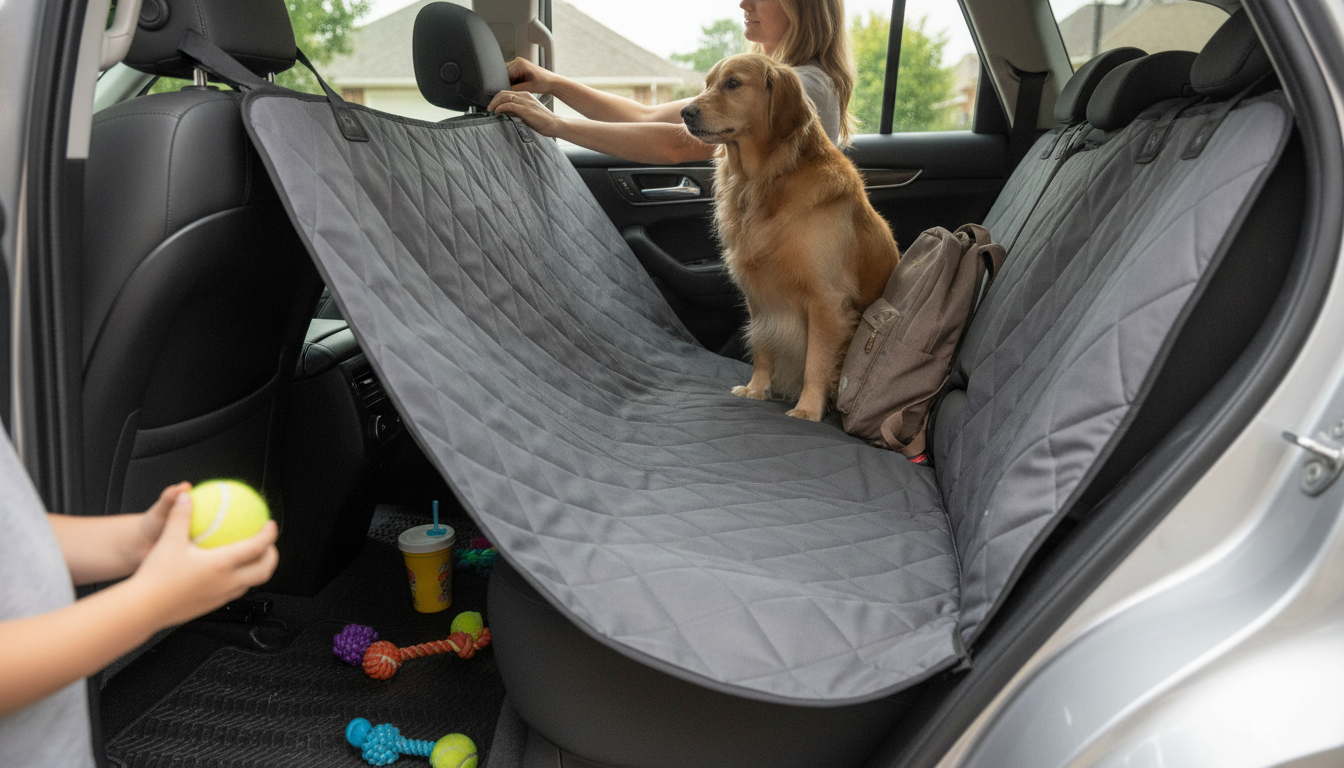
How do I choose the right size dog car seat cover?
Start by matching the cover size to your vehicle first, then confirm it suits your dog’s space needs. A cover that’s too small leaves exposed upholstery and shifting edges; one that’s too large can bunch up, block seat-belt buckles, or interfere with doors and latches.
Measure your car’s seating area
Use a tape measure to capture the width of the bench (door to door) and the depth from the seatback to the front edge of the seat. If you’re choosing a hammock-style cover, also measure the distance between the front and back headrests so the straps can reach without pulling tight. For SUVs, measure the cargo area width and length if you plan to cover the trunk.
Pick the cover style, then match the size
Bench covers should span the full seat width and tuck securely along the edges. Hammock covers need enough height and length to create a stable barrier between front and back seats without sagging. Cargo liners should cover the trunk floor and, ideally, the seatback when folded down. Once you know the style, compare your measurements to the product’s listed dimensions rather than relying only on “standard” sizing.
Account for buckles, anchors, and door protection
Look for a size that aligns with your seat-belt buckles or has accessible buckle openings so you can still clip in a dog harness or seat belt. If your dog rides with paws on the door panel, choose a wider cover with side flaps that reach the door edges. Make sure headrest straps can adjust to your headrest height and thickness.
Choose a fit that stays put
A well-sized cover should sit flat with minimal wrinkles. Non-slip backing, seat anchors, and adjustable straps matter, but they work best when the cover dimensions closely match your seat. For a deeper walkthrough of cover styles and fit tips, visit this dog car seat cover guide.
FAQ
Do dog car seat covers work with child car seats?
Many can, but only if the cover doesn’t interfere with the child seat’s anchoring system and the car seat can be installed tightly per its manual. If the cover adds slack or prevents a secure latch/seat-belt install, remove it under the child seat.











Leave a comment