

Break the Tension: 5-Minute Stress Relief for Busy Days
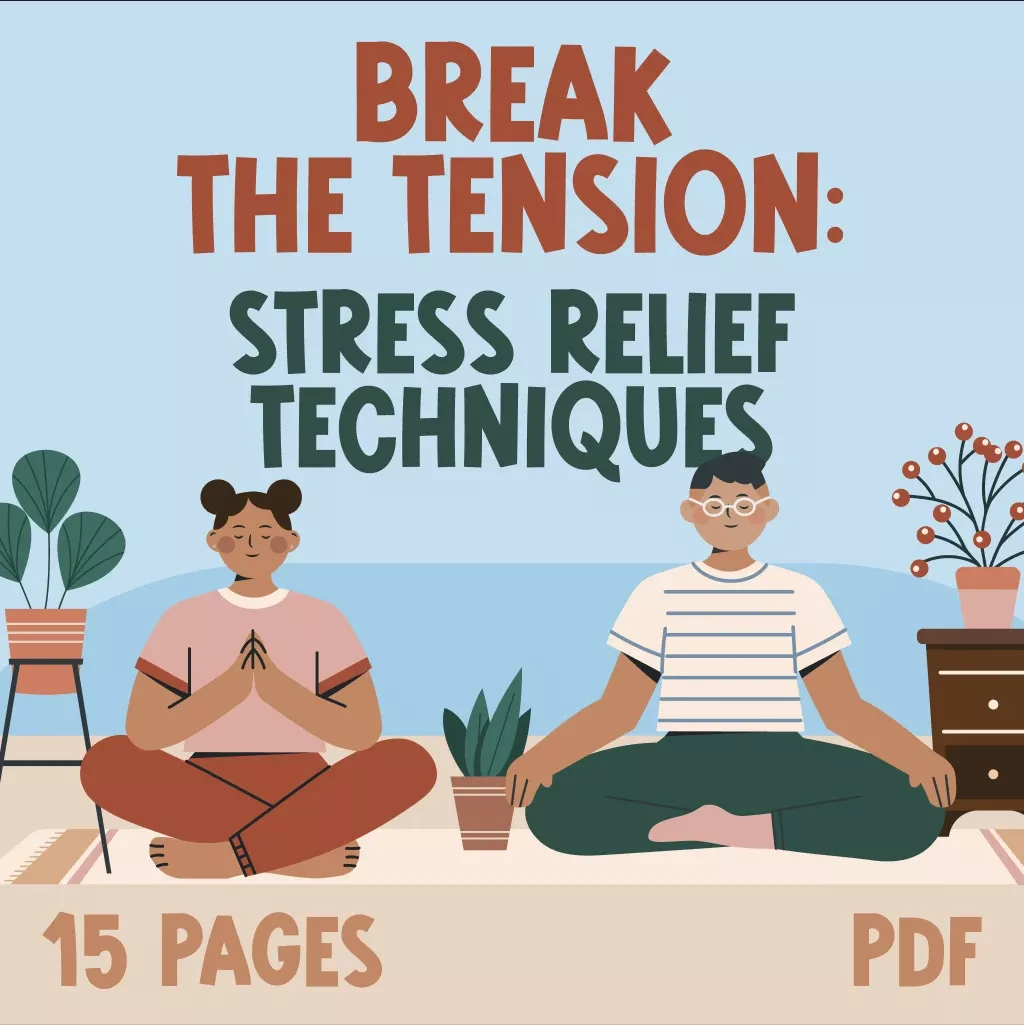
Break the Tension: Stress Relief Techniques for Busy Days
Stress often shows up as tight shoulders, a racing mind, shallow breathing, and the feeling of being behind. The good news: you don’t need a perfect routine or a long break to feel better. A few reliable skills—breathing resets, quick meditations, grounding, and simple time management—can lower intensity fast and make stress easier to prevent.
These techniques aim for a practical win: shifting stress from “overwhelming” to “manageable.” If you’d like a structured, grab-and-go format you can revisit anytime, Break the Tension: Stress Relief Techniques – Breathing Exercises, Quick Meditations, Grounding Techniques, and Time Management Tips to Reduce Stress is an easy way to keep the toolkit in one place.
What “tension” looks like and why it builds so quickly
Tension isn’t just “feeling stressed.” It often has specific tells: jaw clenching, a tight chest, headaches, irritability, doomscrolling or snacking for quick relief, and trouble focusing. Sometimes it looks like productivity—doing lots of small tasks—while avoiding the one thing that feels heavy.
When the stress response kicks in, attention narrows toward threat and the breath tends to get shorter and higher in the chest. The techniques below work by sending the opposite message: safety, steadiness, and choice. That shift helps your nervous system downshift and gives your mind a clearer place to problem-solve.
If stress is constant or intense, it can help to learn more about how it affects health and daily functioning. The American Psychological Association’s stress resource is a solid overview of common causes, signs, and supports.
Breathing exercises that calm the body in 1–3 minutes
Breathing is the fastest “remote control” you have for stress because it directly influences arousal in the body. Pick one option and practice it when you’re calm, so it’s easier to use when you’re not.
Physiological sigh (30–60 seconds)
Inhale through your nose, then “top up” with a second short inhale. Exhale slowly and fully. Repeat 3–5 times. This is especially helpful for sudden stress spikes and tight-chest feelings.
Box breathing (2–4 minutes)
Inhale for 4, hold for 4, exhale for 4, hold for 4. Keep shoulders relaxed and breathe quietly. This is useful before meetings, presentations, or any moment where your thoughts feel loud.
Extended exhale breathing (1–3 minutes)
Inhale for 4, exhale for 6–8. The longer exhale helps signal “no emergency,” easing restlessness and irritability.
If you feel dizzy, you’re likely taking in too much air too quickly. Slow down, return to normal breathing for a few cycles, then restart with smaller, gentler breaths.
| Technique | How to do it | Time | Best for |
|---|---|---|---|
| Physiological sigh | Two-part nasal inhale, long slow exhale | 30–60 sec | Rapid stress spikes, tight chest |
| Box breathing | 4-4-4-4 rhythm | 2–4 min | Racing thoughts, pre-meeting nerves |
| Extended exhale | Inhale 4, exhale 6–8 | 1–3 min | Irritability, restlessness |
Quick meditations that fit into real life
Quick meditation isn’t about forcing your mind blank. It’s about returning—again and again—to something simple, so the nervous system gets a steady cue.
One-minute “label and return”
Notice what’s strongest right now (for example: “worry,” “pressure,” “tightness”). Then return attention to the breath for 3 cycles. Repeat until you feel a little more space.
Two-minute body scan
Sound anchor (1–3 minutes)
Focus on the farthest sound you can detect, then the nearest sound. This gently interrupts rumination without requiring you to wrestle with thoughts. For meditation safety and guidance, the NCCIH overview on meditation and mindfulness is a helpful reference.
Grounding techniques for anxiety, overwhelm, and mental fog
5-4-3-2-1 sensory reset
Feet-and-seat grounding
Temperature cue
A phrase that restores control
Time management tips that reduce stress before it spikes
The 10-minute reset
Single-task windows
Two-list method
Boundary scripts
Meeting hygiene
End 5 minutes early, capture next steps, and schedule one follow-up block instead of carrying it in working memory. For more practical stress-management ideas, the Mayo Clinic’s stress management guide is a strong starting point.
A simple 5-minute plan for daily stress prevention
| Situation | What to try | How long | Where it works |
|---|---|---|---|
| Sudden spike before a call | Physiological sigh | 45 sec | Desk, hallway, car (parked) |
| Overthinking loop | Label and return + extended exhale | 2 min | Anywhere quiet-ish |
| Panic-y body sensations | Feet-and-seat grounding + long exhale | 1–3 min | Public places, meetings |
| Too many tasks | 10-minute reset + 2-minute starter step | 10–12 min | Home or office |
To make the routine feel more doable, reduce friction in your environment. Even a comfortable, ready-to-go outfit can remove one small stressor when you’re rushing; keeping a dependable layer like autumn-womens-coat by the door can be a simple “future you” favor.
Using “Break the Tension” as a grab-and-go toolkit
When stress may need additional support
FAQ
What’s the fastest technique for immediate stress relief?
The physiological sigh is one of the quickest: inhale through the nose, add a short second inhale, then do a long slow exhale; repeat 3–5 times (about 30–60 seconds). Extended-exhale breathing (inhale 4, exhale 6–8 for 1–3 minutes) is another fast option; slow down and take smaller breaths if you feel dizzy.
How often should breathing or grounding exercises be practiced?
A short daily practice (1–5 minutes) builds the habit, plus using the techniques “as needed” when stress spikes. Linking practice to routine triggers—like before opening email or after a meeting—helps consistency without adding another task.
Can quick meditations help if the mind won’t stop racing?
Yes—use an anchor (breath or sound), label what’s happening (“planning,” “worrying”), and gently return without fighting thoughts. Wandering is normal; the benefit comes from the repeated return, not from staying perfectly focused.















Leave a comment