Find the Right Hair Styler Brush for Your Hair Type
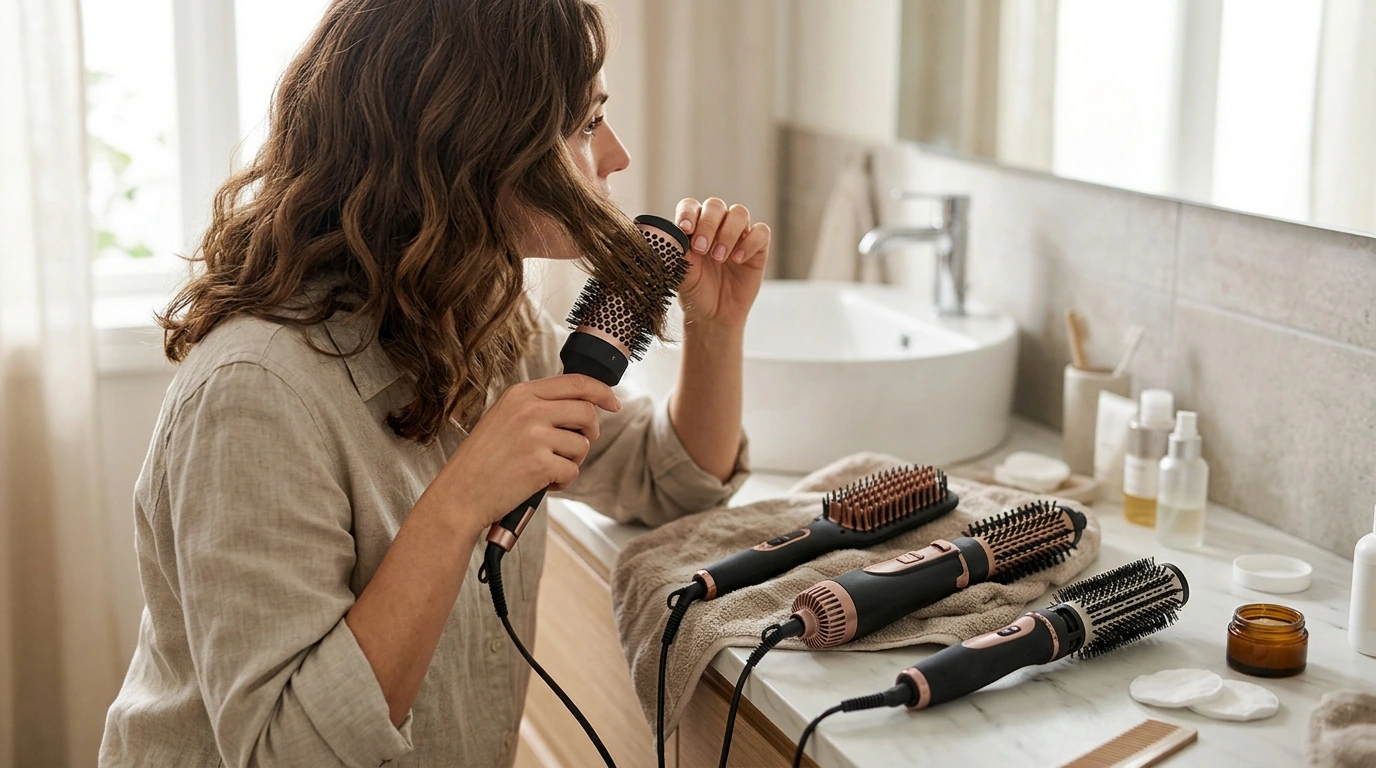
What is the best hair styler brush?
The best hair styler brush is one that suits your hair type, the finish you want, and how much heat your hair can handle. For a smooth, voluminous blowout at home, a hot air brush with adjustable heat and airflow is a versatile choice. If you mainly want to smooth dry hair or touch up a style, a heated straightening brush may be a better fit.
There isn’t one brush that works equally well for every hair type. Fine or fragile hair often benefits from lower heat settings and a lightweight brush. Thick, coarse, or curly hair may need more power, a larger barrel, or a brush with multiple temperature options. Look for controls that are easy to adjust and bristles that glide through your hair without tugging.
Which type of hair styler brush should you choose?
A hot air brush dries and styles at the same time, making it useful for damp hair and rounded, bouncy finishes. A heated smoothing brush is designed to tame dry hair and create a straighter look while retaining more natural movement than a flat iron. A round styling brush without heat can help shape hair while you use a separate blow dryer, but it takes more coordination.
Consider the result you want before choosing attachments or extra features. Oval brushes are often handy for smoothing and adding lift, while round barrels can create bends or curls. A swivel cord, comfortable grip, and settings suited to your hair are practical features you may use more often than a long list of add-ons.
How can you get better results from a styler brush?
Follow the manufacturer’s instructions, especially about whether the brush is made for wet, damp, or dry hair. For a hot air brush, towel-dry hair first if the instructions call for damp hair, then work in manageable sections. Avoid pulling the brush through knots; detangle first and guide it gently from roots toward the ends.
Use a heat protectant when appropriate, and begin with a lower setting. If your hair is still too wet or a section is too large, styling may take longer and the finish may be less smooth. For more guidance on choosing and using a multifunctional option, read the guide to multifunctional hair styler brushes.
FAQ
Should I use a heat protectant with a hair styler brush?
Yes, a heat protectant can help reduce heat-related damage. Choose one made for your hair and the tool, and follow the product directions.











Leave a comment