

20-in-1 Portable Push Up Board + Bands: Small-Space Gym
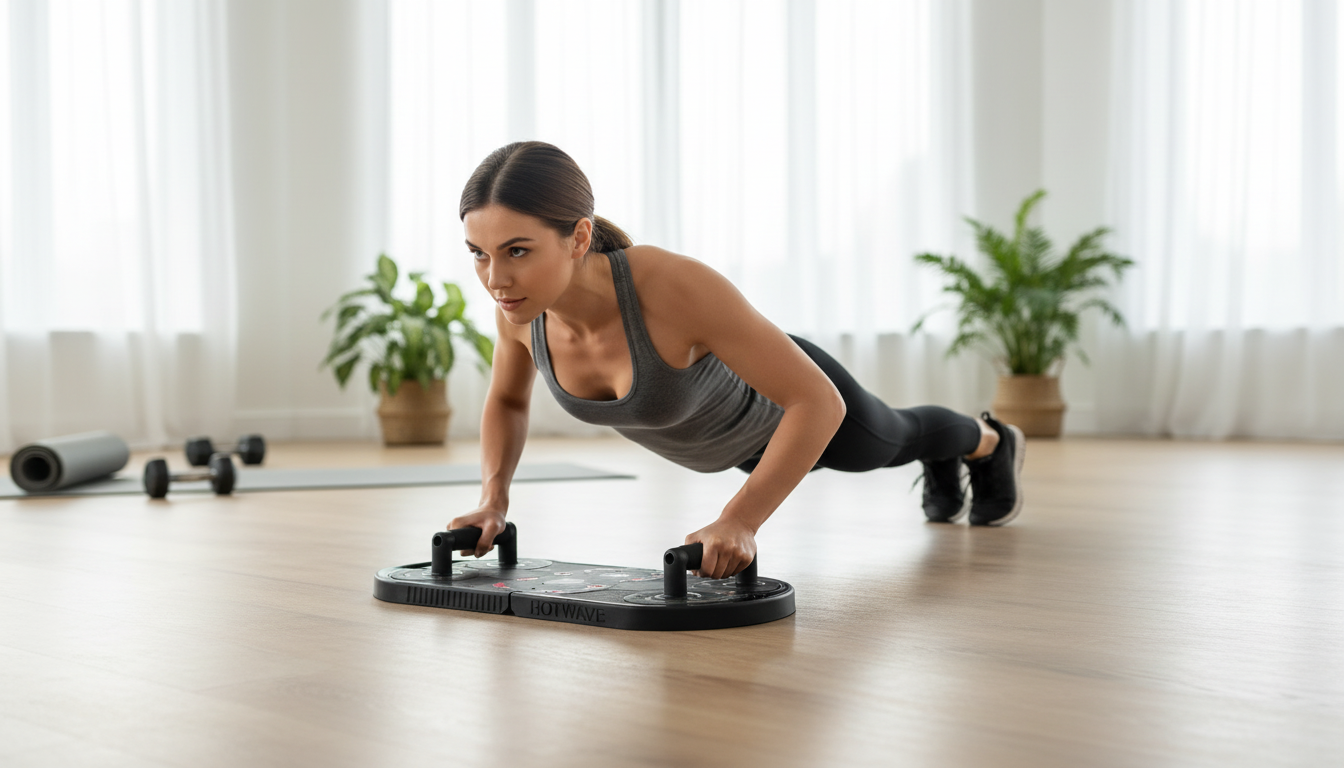
Portable 20-in-1 Push Up Board with Resistance Bands: A Compact Home Gym System
A portable push up board paired with resistance bands can turn a small corner of any room into a practical strength-training setup. With color-coded hand positions and band-assisted movements, this style of system supports targeted upper-body training, simple progression, and quick workouts without bulky equipment. For apartments, dorms, travel, or anyone who prefers fast, repeatable sessions, a fold-and-store board can make strength training feel easier to start—and easier to stick with.
What a 20-in-1 Push Up Board System Includes
Most 20-in-1 push up board kits are built around one idea: change hand placement quickly to change the training emphasis—then add bands for extra exercises without extra floor space.
- Foldable push up board with multiple handle slots so you can switch positions in seconds.
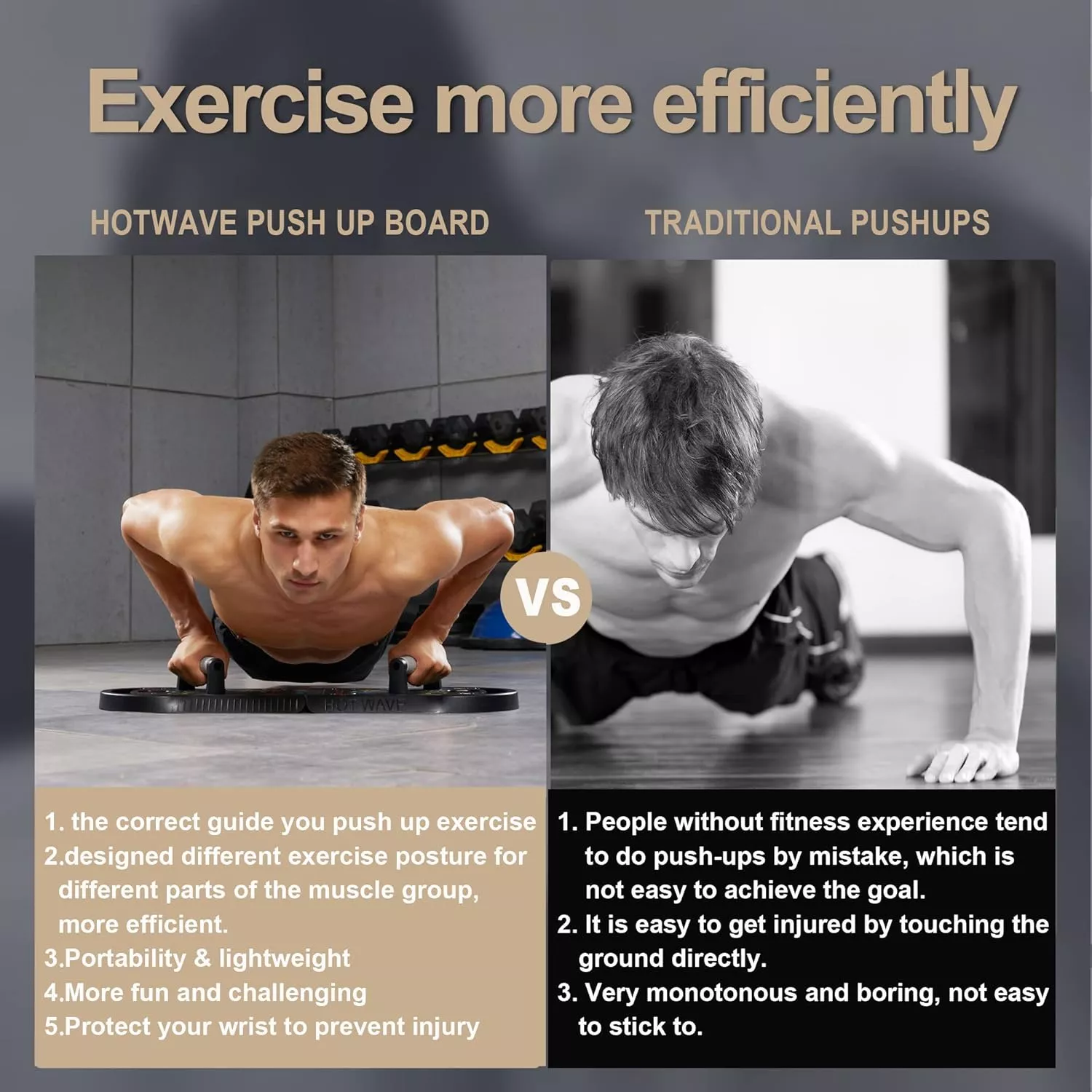
- Detachable push up handles that elevate the hands, typically reducing wrist extension compared with flat-hand push ups.
- Resistance bands to add pulling, pressing, and accessory movements beyond push ups.
- Compact footprint that works in small rooms and packs easily for travel.
- Set-and-go format that minimizes setup time, helping workouts stay consistent.
If consistency is the main challenge, “always visible, always ready” beats complicated equipment that lives in a closet.
How the Color-Coded Positions Target Different Muscles
Color-coded slot layouts simplify where to place the handles, but the real benefit is mechanical: small shifts in hand width and angle can change how your shoulders and elbows move, which changes what feels most challenged.
- Chest emphasis: wider hand positions can shift load toward the pectorals and front delts.
- Triceps emphasis: closer hand positions typically increase elbow extension demand.
- Shoulder emphasis: forward-angled placements can increase anterior deltoid involvement.
- Upper-back engagement: slower eccentrics and strong scapular control improve stability across all variations.
- Form priority: keep a neutral spine, brace the core, and use a controlled range of motion to protect the shoulders.
| Position style | Primary focus | Cues to keep it safe |
|---|---|---|
| Wide | Chest + front shoulders | Elbows not flared excessively; keep shoulders down and back |
| Neutral/standard | Balanced chest + triceps | Brace abs; move as one unit from head to heels |
| Close | Triceps + chest | Keep elbows tracking back; avoid shrugging |
| Forward-angled | Shoulders + chest | Limit range if shoulders pinch; control descent |
For many people, the handles are the unsung hero: they allow a neutral wrist position and often make it easier to “own” the bottom of the rep without collapsing into the shoulders.
Resistance Bands: Turning a Push Up Board into a Full-Body Routine
Push ups are a strong foundation, but bands fill the most common gap in minimalist setups: pulling and posterior-chain work. With a few band patterns, the system becomes more balanced from week to week.
- Row variations: anchor bands under the feet or to the board edges (as designed) for upper-back and biceps work.
- Overhead press patterns: lighter tension supports shoulder endurance and stability without heavy loading.
- Chest press alternatives: band presses add resistance without needing more floor space.
- Lower-body add-ons: squats, hinge patterns, and lateral walks with bands help round out training.
- Progression options: add reps, slow tempo, add pauses, or step farther from the anchor point to increase tension.
General progression guidance aligns well with established resistance training models: gradually increase training demand over time while keeping technique clean (see the ACSM position stand on progression models in resistance training).
A Simple Weekly Plan (15–25 Minutes per Session)
Short sessions work best when they’re repeatable. Aim for 2–4 strength sessions per week, spaced with recovery days as needed, in line with the CDC Physical Activity Guidelines for adults. Rotate emphasis so shoulders and elbows don’t take the same stress every day.
| Block | Exercise | Sets x reps | Rest |
|---|---|---|---|
| Warm-up | Shoulder circles + scap push ups + band pull-aparts | 5–8 minutes | As needed |
| Main 1 | Push ups on board (chosen position) | 3 x 6–15 | 60–90 sec |
| Main 2 | Band row | 3 x 10–20 | 45–75 sec |
| Accessory | Band curls or triceps extensions | 2–3 x 12–20 | 45–60 sec |
| Core | Plank or dead bug | 2 x 30–45 sec | 30–45 sec |
Technique Checklist and Common Mistakes
Portability, Storage, and Who This System Fits Best
Product Options (In Stock)
- Portable 20-in-1 Push Up Board with Resistance Bands – Home Gym Fitness System ($44.51): a compact setup for push variations plus band-based accessories—ideal for short sessions with quick setup.
- N7S/N7P Cordless Vacuum Cleaner, 20kPa Suction, Lightweight & Quiet for Pet Hair ($46.82): a handy add-on for keeping a small workout area clean, especially if you train on carpet or share space with pets.
- Portable Pet Water Bottle ($28.99): useful for quick outdoor walks between work sessions or travel days when workouts and errands overlap.
FAQ
Are push up boards good for beginners?
Yes—handles can reduce wrist extension, and multiple hand positions make it easier to scale difficulty. Start with controlled reps, stop shy of shoulder discomfort, and build volume gradually.
How do resistance bands help with home workouts?
Bands add adjustable resistance for rows, presses, curls, and lower-body movements with minimal space. Tension changes easily by stepping farther from the anchor point or switching band strength.
How often should this type of system be used to see results?
Most people do well with 2–4 strength sessions per week using progressive overload through reps, tempo, or band tension. Results depend heavily on consistency, recovery, nutrition, and sleep.













Leave a comment