

Black 360° Rotating Faucet Nozzle: Stream to Spray
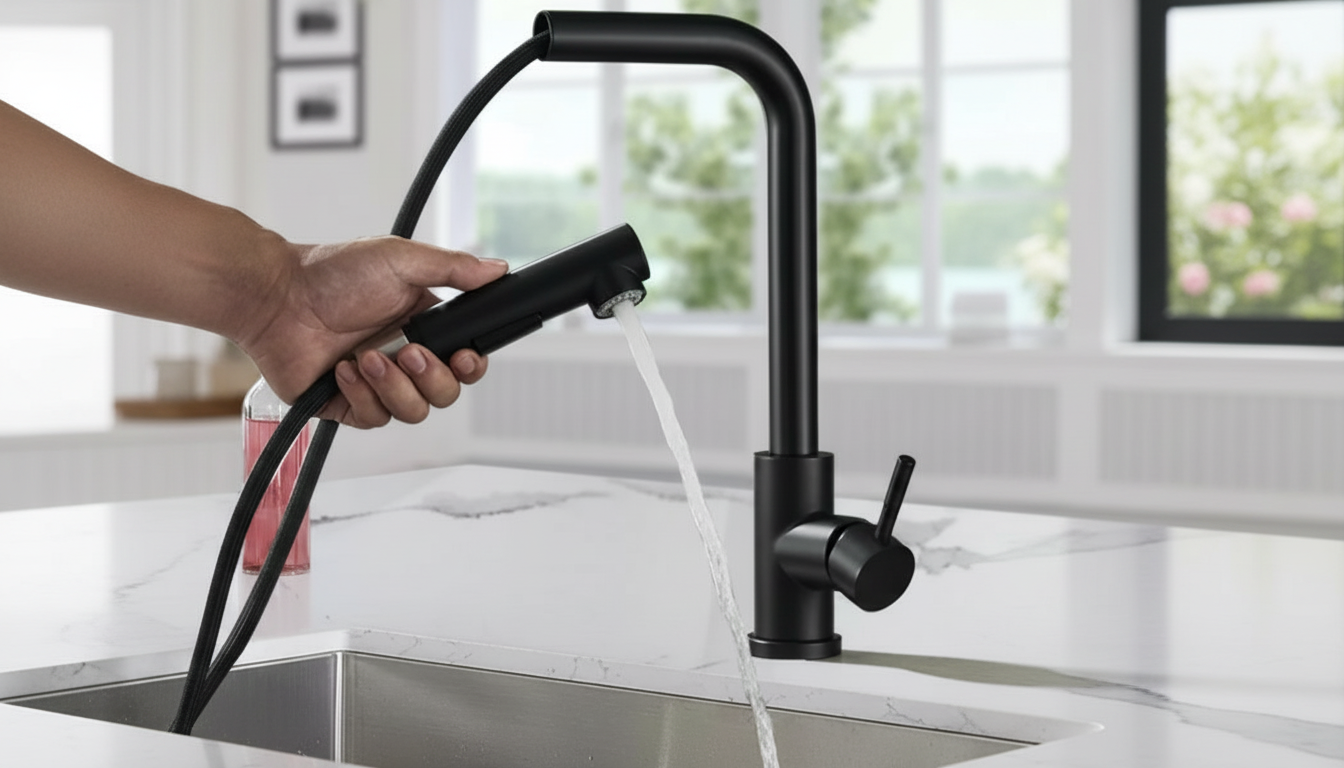
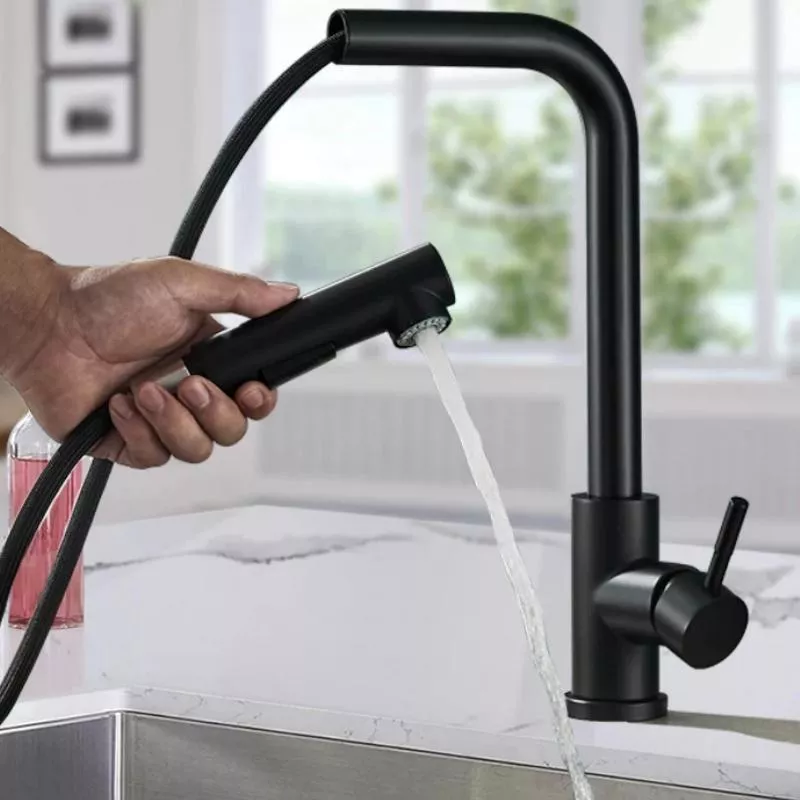
Black 360° Rotation Stream Sprayer Nozzle Stainless Steel Kitchen Sink Faucet
A rotating stream sprayer nozzle can make everyday rinsing faster by widening coverage, improving control, and reducing splash. A 360° rotating, stainless-steel-style kitchen sink sprayer nozzle typically replaces the aerator/nozzle at the end of a faucet spout, adding multi-angle aiming and an easy switch between a focused stream and a broader rinse. Below is a practical guide to how this style of nozzle works, what installation and daily use are like, and what to confirm before choosing one for a common kitchen faucet setup.
What a 360° rotation stream sprayer nozzle changes at the sink
The biggest improvement is control. Instead of repositioning a full spout to chase rinsing angles, a rotating head lets you direct water exactly where it’s needed—around corners of the basin, along sink walls, and into oversized cookware.
- Creates more flexible water direction for rinsing large pans, corners of the basin, and hard-to-reach spots.
- Switching between a focused stream and a wider rinse pattern helps handle both delicate produce and stuck-on residue.
- Rotating head design can reduce awkward wrist angles during repetitive rinsing tasks.
- Best results come from matching spray pattern and water pressure to the sink size and typical dishware.
Product overview: black rotating sprayer nozzle for kitchen faucets
This type of add-on nozzle is designed as a faucet-end component, not a full faucet replacement. It’s commonly chosen when an existing nozzle is worn out, scaled up, or producing uneven flow—and when the goal is a more versatile rinse without changing the entire fixture.
- Black exterior finish designed to pair with modern faucet styles and darker sink accessories.
- Rotating head supports multi-angle rinsing without moving the entire faucet spout.
- Stream/spray style output intended for quick rinse-downs of plates, cookware, and sink walls.
- Designed as a faucet-end nozzle component rather than a full faucet replacement.
- A practical upgrade when the existing nozzle is worn, scaled, or uneven in flow.
Quick reference: what to confirm before buying
| Check item | Why it matters | How to verify |
|---|---|---|
| Thread size | Prevents leaks and cross-threading | Measure the existing nozzle threads or compare to the removed aerator/nozzle |
| Male vs. female connection | Determines whether the nozzle can attach to the faucet spout | Inspect whether the faucet has internal (female) or external (male) threads |
| Clearance under cabinets | Rotating heads can add length | Measure spout-to-splashback distance and overhead clearance |
| Water pressure tolerance | High pressure can increase splash; low pressure can feel weak | Check home pressure and existing faucet performance |
| Finish compatibility | Black finishes vary from matte to glossy | Compare sheen and tone to faucet hardware in daylight |
Materials and finish: stainless steel components and black coating
Nozzles described as stainless-steel-style often use stainless components in the body and/or internal parts to help resist corrosion in an environment that sees constant water, detergents, and temperature swings. The black exterior coating is chosen mainly for appearance and coordination with modern hardware.
- Stainless-steel components are commonly chosen for corrosion resistance around water and detergents.
- Black finishes can show mineral spots more clearly; routine wipe-down keeps the surface looking uniform.
- If hard water is present, descaling the outlet screen helps maintain a consistent spray pattern.
- A smooth, well-seated gasket is often more important for leak prevention than body material alone.
If drinking-water safety is a concern, it can be helpful to understand common water quality standards and guidance from authoritative organizations. For background, see NSF’s overview of drinking water standards and CDC guidance on reducing lead exposure from water.
Installation and compatibility checks
Most faucet-end rotating nozzles install in minutes, but a careful thread and washer check prevents the common problems (drips, wobble, or uneven flow). Plan to use only hand pressure first; tools can damage threads or deform washers.
If you notice a persistent drip anywhere around the sink, it’s worth addressing quickly. Even small leaks add up over time; EPA WaterSense resources on fixing leaks outline why routine checks can reduce waste.
Everyday use: stream, rinse coverage, and splash control
Care and maintenance for longer service life
How to choose the right rotating sprayer nozzle for a kitchen sink faucet
Selection checklist by kitchen setup
| Kitchen setup | Recommended focus | Common pitfall to avoid |
|---|---|---|
| Small sink / shallow basin | Controlled stream + modest spray width | Too-wide spray causing splashback |
| Large sink / deep basin | Wider rinse coverage + easy rotation | Insufficient reach or narrow rinse pattern |
| Hard water area | Easy-clean outlet and accessible screen | Ignoring descaling until flow becomes uneven |
| Modern black hardware | Matching matte/gloss tone | Mixing finishes that clash under natural light |
| Low household pressure | Efficient flow design and minimal restriction | Adding a nozzle that reduces flow too much |
Troubleshooting common issues
FAQ
Will a rotating sprayer nozzle fit any kitchen faucet?
Fit depends on thread size and whether your faucet spout has male (external) or female (internal) threads. It also may not work with proprietary pull-down wands that require a brand-specific head.
Why is the spray pattern uneven after installation?
An uneven pattern is usually caused by trapped debris in the screen/filter or mineral scale at the outlet holes. Remove the head (or screen if accessible), rinse thoroughly, and descale as needed; also confirm the washer is seated flat and not blocking flow.
How can splash be reduced when using a stronger spray?
Reduce the faucet flow rate and aim the rotating head closer to the surface so water doesn’t arc across the basin. In shallow sinks, use stream mode for better control and rotate the head downward rather than toward the side walls.














Leave a comment