

Lift-Top Coffee Table Weight Limit When Raised

What weight can a lift-top coffee table hold when the top is raised?
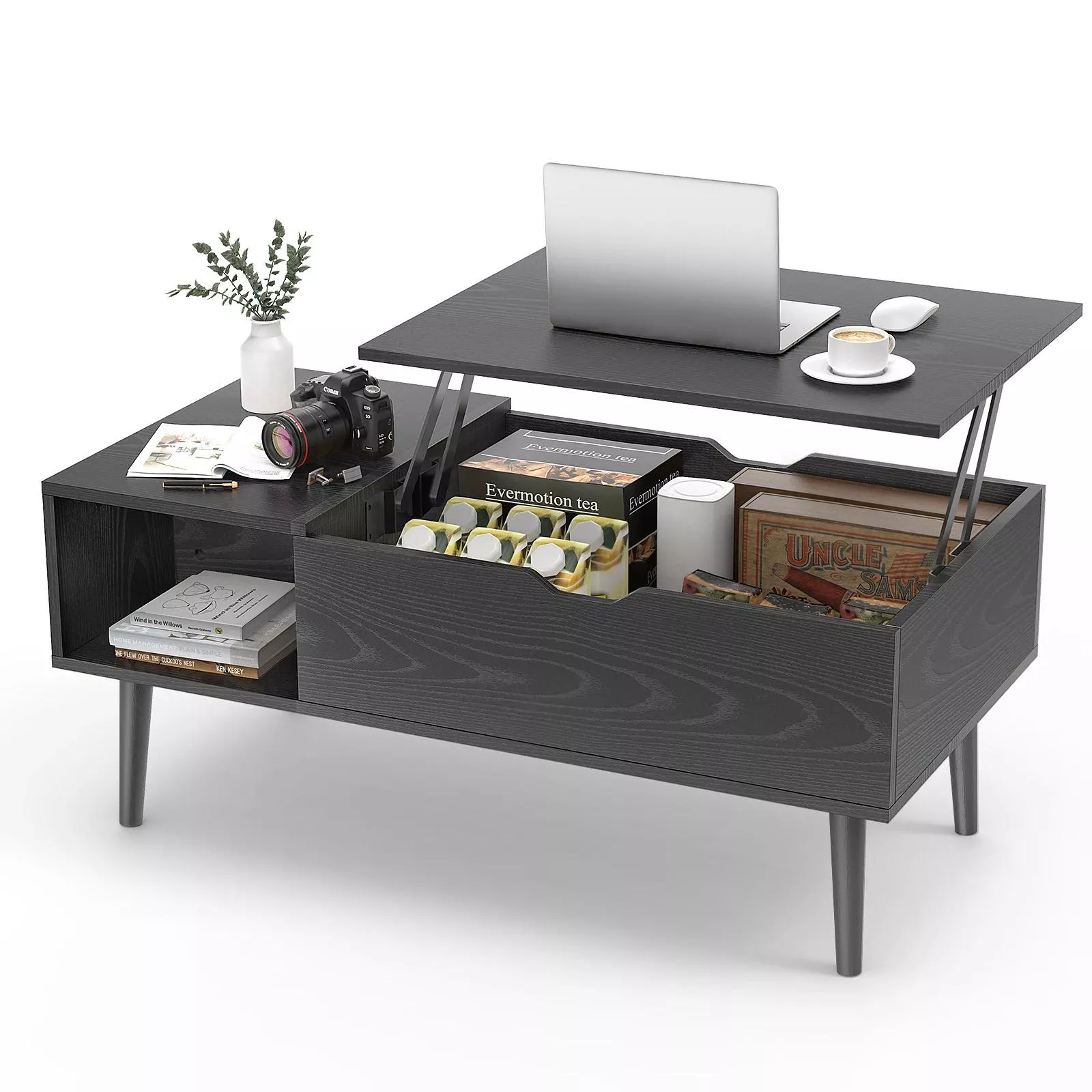
Most lift-top coffee tables can safely hold about 15–30 pounds on the raised surface, while sturdier models with reinforced lift mechanisms may handle closer to 40–50 pounds. The exact number depends on the lift hardware (spring-assisted vs. gas struts), the thickness of the tabletop, the quality of the hinges, and how far the top is extended when lifted.
In day-to-day use, that range is usually plenty for a laptop, a meal tray, books, and a few accessories. The raised position is best treated like a “work-and-dine” surface—not a bench, not a step stool, and not a place for heavy loads like large aquarium tanks, dense free weights, or a full stack of textbooks concentrated in one spot.
What affects the weight limit when it’s lifted?
When the top rises, leverage increases and the load shifts forward. Weight placed near the outer edge creates more torque on the lifting arms and mounting points than the same weight placed closer to the center or hinge side. For the best stability, spread items out and keep heavier objects closer to the lift mechanism rather than the front lip.
How to avoid wobble or damage
Use the raised top on an even floor, tighten hardware periodically, and don’t “drop” the top closed. If your table has a split top or a partial lift design, keep heavier items on the fixed section and lighter items on the moving section whenever possible.
For a deeper look at lift mechanisms, storage layouts, and choosing the right style for your living room, visit the full guide here: adjustable lift-top coffee table guide.
FAQ
How do you distribute weight on a lift-top coffee table to keep it stable?
Place heavier items closer to the hinge or lifting arms and keep the load centered. Avoid concentrating weight on the front edge of the raised top, and spread items out instead of stacking them.














Leave a comment