

3-in-1 RC Drone Boat Car for Kids: Safe Play Guide
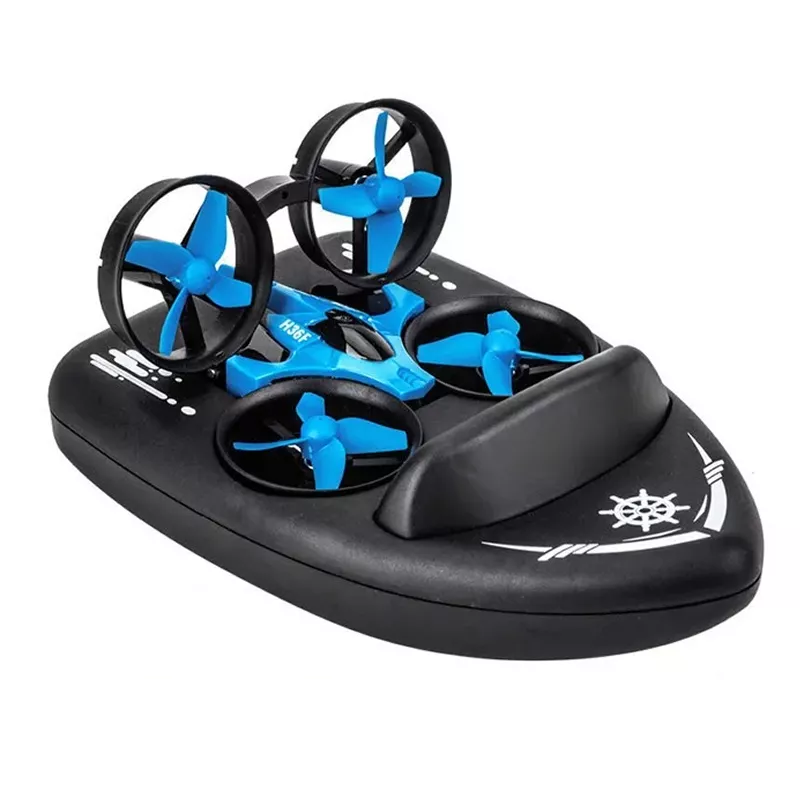
3-in-1 RC Drone Boat Car for Kids: One Remote, Three Ways to Play
A single RC toy that can roll on the driveway, skim across calm water, and take short flights can keep kids engaged longer than a one-mode vehicle. This guide breaks down how a 3-in-1 RC drone/boat/car fits different ages, play spaces, and safety needs, plus what to look for before handing over the controller.
What a 3-in-1 RC Drone Boat Car Is (and what it’s best for)
A 3-in-1 RC drone boat car is a convertible remote-control vehicle designed to operate in three modes: ground driving, water boating, and aerial flight. The big advantage is variety—one toy can match different locations and moods without packing multiple boxes or buying separate vehicles.
It’s especially handy for families who bounce between a driveway, a park, and a pool or calm shoreline over the weekend. You can set up quick driveway obstacle courses, try short shoreline runs on still water, and then move to brief, controlled flights in open areas.
It’s not meant to replace hobby-grade drones or high-speed RC boats. Instead, the value is approachable, all-in-one fun, simple mode changes, and a learning curve that keeps kids experimenting without needing specialized gear.
How the three modes feel in real play
Car mode: fast setup, quick wins
Car mode is usually the smoothest starting point. It works well indoors in an open room or outdoors on pavement and packed dirt. Kids can build confidence with steering, stopping on command, and basic “racing lines” around cones, chalk circles, or a couple of small ramps.
Boat mode: best on calm water, close to shore
Boat mode shines on calm pools or still shoreline water where there’s little wind and no current. Keep runs near the edge so the toy stays visible and retrievable. A simple rule helps: if an adult wouldn’t want to wade out to that spot, the toy shouldn’t be sent there.
Drone mode: open space and short practice flights
Drone mode is the most exciting—and the one that needs the most space. Choose an open field or a big yard, well away from people, pets, trees, and power lines. Short practice sessions (takeoff, hover, gentle turn, landing) build control quickly without turning playtime into repeated crash recovery.
A fun way to structure sessions: “mode rotation”
To keep things from feeling chaotic, try a mode rotation game: timed car laps, a short water run near shore, then a takeoff-and-land challenge. Kids get variety, but the play stays organized and easier to supervise.
| Mode | Best surface/setting | Skills kids practice | Common pitfalls to avoid |
|---|---|---|---|
| Car | Smooth floors, pavement, packed dirt | Steering control, pacing, obstacle navigation | Deep carpet snags, gravel that flips the vehicle |
| Boat | Calm pool or shoreline water | Gentle throttle control, directional planning | Wind drift, waves, losing sight farther out |
| Drone | Open field or large yard | Takeoff/landing, orientation, altitude control | Flying near people/trees, indoor ceiling impacts |
Age fit and supervision: making it enjoyable (not frustrating)
Younger kids usually have the best experience with short, “win-able” sessions. Aim for 5–10 minutes per mode so attention stays high and batteries aren’t drained during repeated trial-and-error. Simple tasks like “stop on the line” or “circle the cone once” prevent overwhelm.
Older kids often enjoy challenge goals: clean turns on pavement, straighter water runs, and smoother landings. Adding a stopwatch (or a scorecard for “gentle landings”) keeps the focus on control rather than speed.
Supervision matters most in drone and water modes. Use a consistent “launch zone” for flight and a clear “no-go zone” around people, pets, and anything breakable. For water play, set a boundary close to the edge and keep retrieval tools ready.
A simple household rule set can prevent most headaches: fly only when an adult is present, and use water mode only within a defined, easy-to-reach area.
Safety checklist for air + water + land
Pick a wide, open flying area, well away from roads and crowds. For U.S. recreational flight guidance, the FAA’s official recommendations are a solid baseline: FAA — Flying for Fun (Recreational UAS Safety Guidance).
Avoid strong winds. Small drones can drift faster than kids can correct, especially when they’re still learning orientation and throttle control.
For water use, stick to calm, shallow, accessible areas, and plan retrieval before launch. Water safety basics from the American Red Cross are worth reviewing for any family play near water: American Red Cross — Water Safety Tips.
Charge batteries on a non-flammable surface and stop using any battery that swells, leaks, or overheats. For general toy safety reminders and recalls, see: CPSC — Toy Safety.
What to look for before buying a 3-in-1 RC vehicle
Featured picks for family play
All-in-one RC fun: 3-in-1 RC Drone Boat Car for Kids
Helpful add-on for water-side routines: Baby Bathing Pillow
Tips for first-day success
FAQ
Can kids use a 3-in-1 RC drone/boat/car without prior experience?
Yes. Start with car mode first, then introduce short drone flights in an open area, and save boating for calm water near shore. Adult supervision is especially important for flight and water play.
Where is the safest place to fly a small RC drone for kids?
An open field or a large yard away from people, roads, trees, and power lines is safest. Avoid windy days and follow local rules for recreational drone use.
What should be done if the toy drifts away on water?
Don’t swim after it in unsafe conditions. Use calm water close to shore, keep a retrieval tool like a net or line ready, and have an adult handle recovery.














Leave a comment