

Critical Thinking eBook: Decision Tools, Teasers & Skills
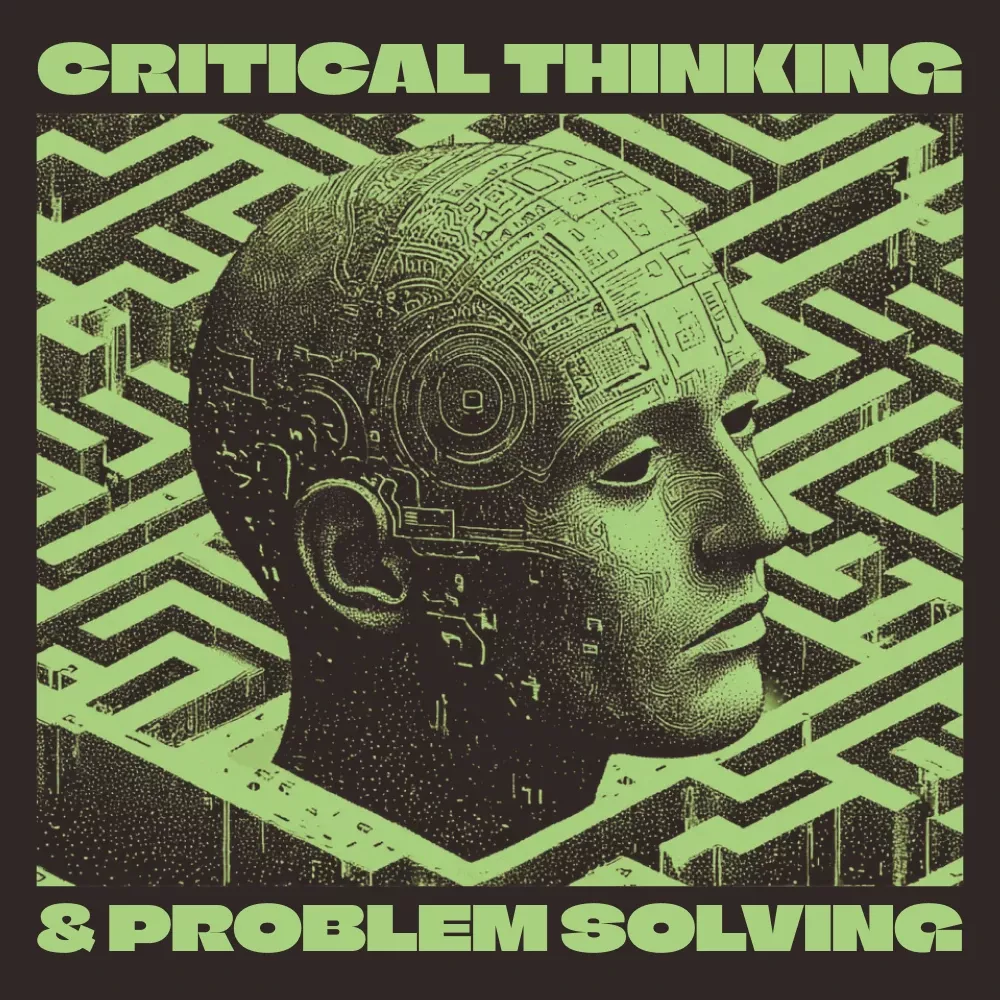
Critical Thinking & Problem Solving eBook: A Practical Digital Guide for Smarter Decisions
Clear thinking is a daily advantage—at work, at home, and in the small moments where choices add up. Our Critical Thinking & Problem Solving eBook – Digital Download Guide for Smarter Decision Making, Brain Teasers & Life Skills Ebook is built for real life: decision-making frameworks you can reuse, brain teasers that train flexibility, and life-skill tools that help turn “I’m stuck” into “I have a plan.”
Instead of relying on motivation or “good instincts,” you’ll practice a repeatable way to evaluate options, test assumptions, and take the next right step—even when you’re busy, stressed, or unsure.
What this eBook helps you do (beyond “think better”)
- Make decisions with less second-guessing by using repeatable steps instead of relying on mood or pressure.
- Spot common thinking traps (assumptions, rushed conclusions, all-or-nothing framing) before they steer choices.
- Break down messy problems into smaller, solvable parts—so action becomes obvious.
- Strengthen mental agility with brain teasers designed to practice patterns, logic, and perspective shifts.
- Build everyday life skills: prioritizing, evaluating options, communicating reasoning, and learning from outcomes.
If you want a deeper definition of critical thinking from an academic lens, the Stanford Encyclopedia of Philosophy is a helpful reference. Our team’s goal here is practical: giving you tools you’ll actually use when decisions show up on a Tuesday afternoon.
Inside the guide: decision tools + brain teasers + life skills
- Decision-making frameworks that translate to everyday situations: picking between options, setting priorities, handling uncertainty, and planning next steps.
- Problem-solving templates that turn “too big” into “doable,” including ways to define the problem, identify constraints, and test solutions.
- Brain teasers and exercises that keep practice engaging—useful for building focus and flexibility without feeling like homework.
- Reflection prompts that help lock in progress: what worked, what didn’t, and what to adjust next time.
- A digital format that fits modern routines: learn, practice, and revisit sections whenever a new problem shows up.
Three parts of the eBook and how to use each
| Part | What it trains | Best time to use it | Quick win |
|---|---|---|---|
| Decision-making guides | Clarity, trade-offs, confidence | Before a purchase, commitment, or difficult conversation | Reduce choices to 2–3 strong options with reasons |
| Problem-solving steps | Structure, planning, follow-through | When the situation feels messy or overwhelming | Turn one big issue into a short action list |
| Brain teasers & practice | Flexibility, pattern recognition, focus | A daily 10–15 minute reset | Sharpen attention without a screen-scrolling spiral |
A simple routine that makes the lessons stick (10–15 minutes a day)
- Pick one micro-skill per day (example: separating facts from assumptions) and apply it to something real—an email, a schedule change, a purchase, or a family plan.
- Do one brain teaser immediately after learning the concept; switching modes helps the mind practice adaptation under mild pressure.
- Use a single note page for “Today’s decision”: write the goal, the options, the trade-off, and the next action. Keep it short so it stays sustainable.
- Weekly reset: revisit one past decision, identify what information was missing, and choose one improvement for next time.
- When stress is high, shrink the process: define the problem in one sentence, list two options, choose one next step. Momentum builds clarity.
Decision-making is a real concept in psychology, not just a productivity buzzword. The APA Dictionary offers a useful baseline definition, and this eBook helps you turn that idea into daily behavior.
Where it fits in real life: common scenarios the guide supports
- Work and study: prioritizing tasks, planning projects, handling feedback, and communicating a recommendation with clear reasoning.
- Personal life: budgeting choices, time management, relationship conversations, and decisions that come with uncertainty.
- Digital life: evaluating claims, comparing options, and resisting impulsive choices fueled by urgency or hype.
- Family life: simplifying routines, planning ahead, and solving recurring friction points with step-by-step thinking instead of repeated arguments.
- Self-development: building consistency, tracking habits, and using small experiments to learn what actually works.
One practical way to apply the frameworks is to test them on low-stakes, everyday choices first. For example, you can practice identifying constraints, comparing trade-offs, and setting a “good enough” threshold while deciding between items like our Low Waist Cargo Pants or an outerwear option like autumn-womens-coat. The point isn’t the category—it’s rehearsing a calmer, clearer process you can reuse when the stakes are higher.
Why brain teasers belong in a problem-solving toolkit
Problem solving itself is widely studied; Encyclopaedia Britannica gives a broad overview. Our team’s approach is to make those principles usable in the moment you need them, with prompts and templates you can quickly repeat.
Digital download benefits: keep the tools close
If you’re building a calmer routine at home, you can also apply the same “define the problem, set constraints, pick the next step” structure to household choices—like simplifying a bath-time setup with our Baby Bathing Pillow. When your process stays the same, decisions get lighter.
FAQ
Is this eBook better for beginners or people who already enjoy puzzles and logic?
It’s beginner-friendly while still valuable for experienced readers because you’ll use reusable frameworks, flexible difficulty in practice, and a mix of decision tools and brain teasers that you can scale up or down.
How fast will results show up?
You can notice small wins within days—clearer options, fewer spirals of overthinking, and quicker next steps—then build stronger habits over a few weeks with consistent short practice.
What do I need to use the digital download?
You just need a device that can open common eBook or document formats, so you can read, revisit, and apply the tools wherever you keep your notes and daily plans.













Leave a comment