

14-Digit Mechanical Keyless Lock with Adjustable Handle
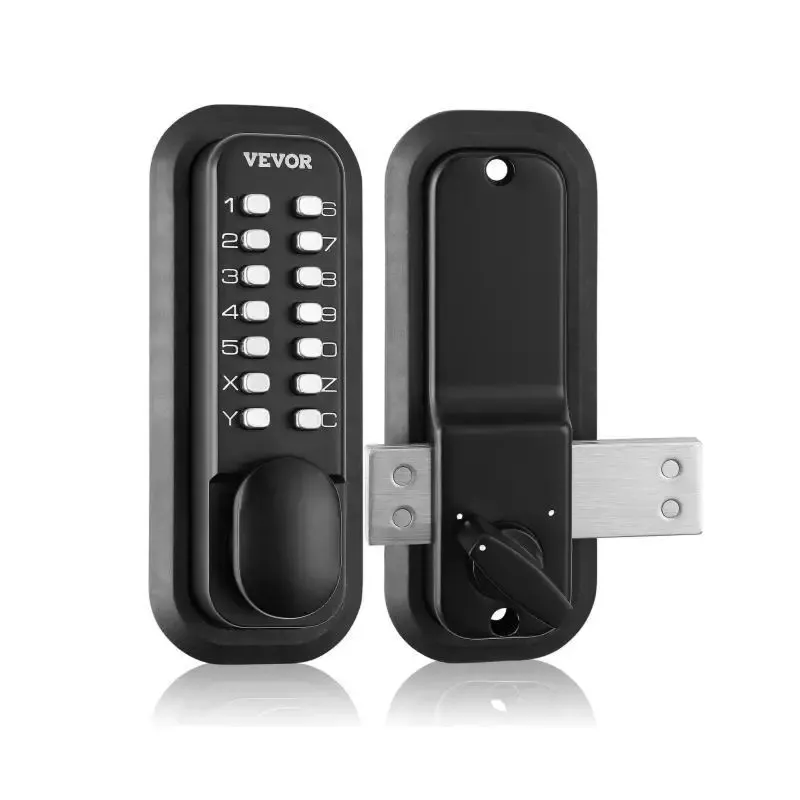
Mechanical Keyless Entry Door Lock with 14 Digit Keypad and Adjustable Handle
A mechanical keypad lock delivers key-free access without batteries, Wi‑Fi, or phone apps. That makes it a practical upgrade for doors where reliability matters—rental units, side entries, workshops, and any household tired of hiding spare keys. This model pairs a 14-digit keypad with an adjustable handle designed to work across common door swing setups, keeping day-to-day operation simple and consistent.
What makes a mechanical keypad lock different
Mechanical keyless locks rely on a code-based mechanism rather than electronics. Instead of managing batteries, connectivity, or app permissions, you get straightforward access using a keypad and internal mechanical parts.
- No batteries or Wi‑Fi required: Fewer failure points during outages, cold snaps, or high-heat environments.
- Code-based entry: Everyday access happens through the keypad instead of a traditional keyed cylinder routine.
- Great for shared access: Useful for rental properties, guest suites, workshops, garages, and side entrances where keys tend to wander.
- Lower maintenance overhead: No charging schedule, pairing steps, or firmware updates—just periodic checks for alignment and smooth latch movement.
Mechanical doesn’t automatically mean “maximum security,” but it does mean predictable operation—especially when installed on a solid door with a well-supported frame and strike plate.
Key features of the 14-digit keypad and adjustable handle
This lock focuses on practical usability: a larger keypad layout for code flexibility and an adjustable handle intended to accommodate different door handing needs (left-hand vs. right-hand swing). If the goal is to avoid battery lockouts while keeping entry quick for family, guests, or service providers, the design is built around that priority.
- 14-digit keypad: Provides flexibility when setting and sharing access codes.
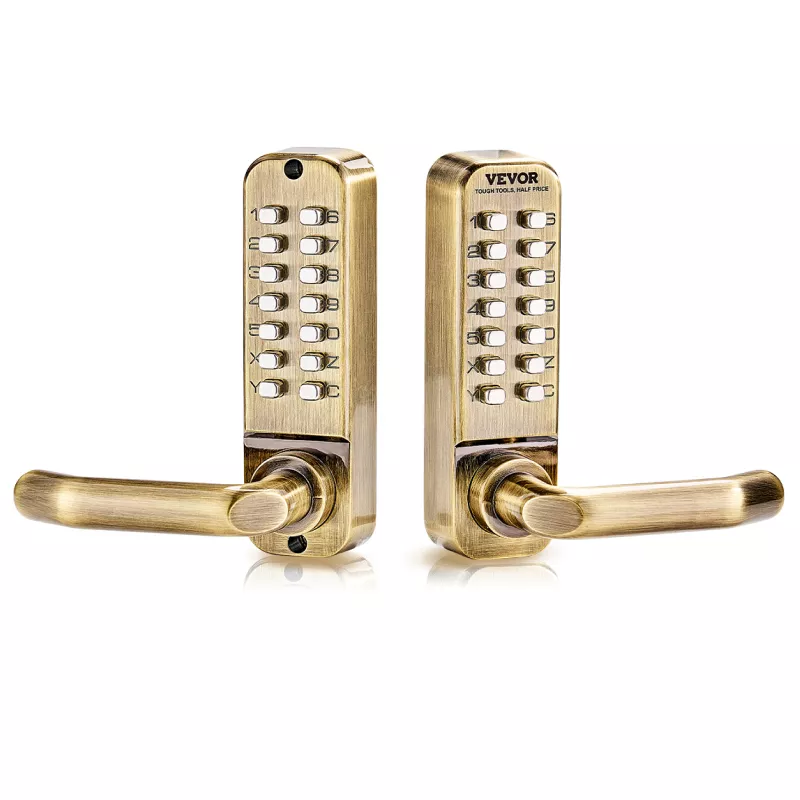
- Adjustable handle orientation: Helps match left-hand or right-hand door swing configurations (confirm your handing before installation).
- Mechanical operation: No battery compartments, no low-battery warnings, and no “dead keypad” surprises.
- Simple, repeatable entry: Designed for fast daily use without phone dependence.
- Guest-friendly: A tactile keypad is often easier for visitors than app-based smart entry.
At-a-glance feature checklist
| Feature | Why it matters | What to confirm before buying |
|---|---|---|
| Mechanical (no batteries) | Entry works during power outages; fewer electronics to fail | Door environment, expected usage frequency |
| 14-digit keypad | More options for code setup and sharing | Visibility in low light; ease of pressing buttons |
| Adjustable handle | Supports different door swing directions and setups | Handing requirements; existing handle position |
| Keyless entry | Reduces key copying and lost key problems | Who needs access and how often codes change |
| Simple operation | Easy for guests and non-technical users | Installation compatibility with current door prep |
Door compatibility and fit checks to do before ordering
A keypad lock performs best when the door prep and measurements match what the hardware expects. A few quick checks reduce the risk of binding handles, misaligned latches, or inconsistent locking.
- Door thickness: Measure and compare with the supported range. Many residential doors are commonly 1-3/8″ to 1-3/4″.
- Backset: Confirm whether your door is 2-3/8″ or 2-3/4″ (the distance from the door edge to the center of the bore hole).
- Bore hole and latch cutout: Check whether your existing holes match standard cylindrical lock prep.
- Handle handing: Identify whether your door is left-hand or right-hand swing and confirm the adjustable handle covers the orientation you need.
- Exterior exposure: For doors that take direct rain or harsh sun, consider added protection (like an overhang or storm door) and keep moving parts clean and dry when possible.
Installation overview and everyday use
Most mechanical keypad locks install similarly to a standard cylindrical handle set, but careful alignment matters more because the keypad mechanism needs smooth, predictable movement.
Security and durability expectations
- Reinforce the strike plate: On exterior doors, longer screws into the framing can improve resistance to forced entry.
- Watch for alignment drift: Seasonal swelling or settling can cause a latch to rub, which may lead to inconsistent keypad operation.
- Inspect wear points: Check for loose mounting screws, a sticky latch, or keypad button wear—small mechanical issues are often easy to fix early.
- Look for recognized standards when needed: If a property requires certified hardware, review applicable ANSI/BHMA information and any product-specific listings. Helpful references include BHMA standards resources and the FTC’s home safety guidance.
When this lock is a strong match
In-stock picks
- Mechanical Keyless Entry Door Lock with 14 Digit Keypad and Adjustable Handle ($42.51)
- Low Waist Cargo Pants ($54.49)
- Baby Bathing Pillow ($15.99)
FAQ
Does a mechanical keypad lock work without batteries or power?
Yes—purely mechanical keypad locks don’t require batteries, Wi‑Fi, or household power to operate. Reliable performance still depends on correct installation, proper alignment, and keeping the latch and handle mechanism in good mechanical condition.
Will an adjustable handle fit both left-hand and right-hand doors?
Often, yes: an adjustable handle is designed to be configured for left-hand or right-hand door swing. Confirm your door handing (the side the hinges are on and the direction the door swings) and verify the lock’s supported orientations before installing.
What should be checked before installing a keypad lock on an exterior door?
Check door thickness, backset, and that your bore holes match standard cylindrical prep, then confirm latch alignment and smooth closing into the strike plate. For exterior use, consider weather exposure and reinforce the strike plate/frame to strengthen the door system overall.












Leave a comment