

3-Speed Vinyl Player: Bluetooth & Built-In Speakers
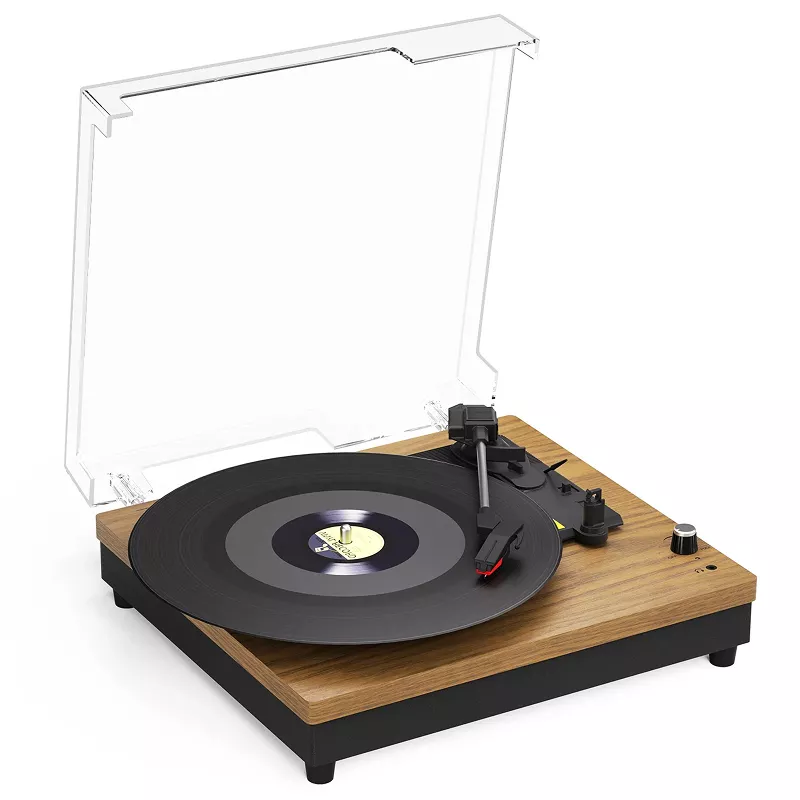
3-Speed Vinyl Record Player with Built-In Stereo Speakers and Bluetooth Connectivity
A compact turntable can make vinyl feel effortless: set it on a table, plug it in, drop the needle, and you’re listening. A 3-speed record player adds the flexibility to play the most common record formats, while built-in stereo speakers keep the setup simple for small spaces. Add Bluetooth connectivity, and you can fit the player into a modern routine—whether that means playing music without extra audio gear or using wireless listening when the room calls for it.
If you’re shopping for a straightforward, space-saving option, the 3-Speed Vinyl Record Player with 2 Built-In Stereo Speakers and Bluetooth Connectivity is designed to cover the basics without turning your room into an audio project.
What this record player is designed to do
- Play vinyl at three speeds so you can match most collections, including 33⅓ RPM LPs, 45 RPM singles, and many 78 RPM older records.
- Provide built-in stereo speakers for an all-in-one option that works well on desks, bedroom dressers, dorm shelves, and small living rooms.
- Support Bluetooth connectivity for more flexible listening, depending on whether the unit is set up to send or receive audio wirelessly.
- Keep controls simple and the footprint compact, which is especially helpful for beginners and casual listening sessions.
Key features that matter in everyday use
3-speed playback (33/45/78)
Speed selection is more than a convenience—it’s the difference between a song sounding “right” and sounding noticeably off. If you accidentally play a 33⅓ LP at 45 RPM, vocals will sound higher and the track will finish too fast. The easiest habit is to check the record label or the sleeve before you start, then set the speed first and lower the tonearm second.
Two built-in stereo speakers
Built-in speakers are about quick setup and low clutter. For the cleanest sound, placement matters: a sturdy, level surface helps prevent extra vibration that can muddy bass or cause the needle to mis-track. Also consider the space around the player—pushing it into a corner can exaggerate low frequencies and make the sound feel “boomy,” especially at higher volume.
Bluetooth connectivity
Bluetooth is useful, but it can be confusing because different turntables handle it differently. Some units receive Bluetooth (so your phone streams to the turntable’s speakers). Others transmit Bluetooth (so your records play to a Bluetooth speaker or headphones). The practical way to confirm is to look at the mode labels on the controls and observe pairing behavior. For technical background on how Bluetooth works across devices, the Bluetooth SIG specification library is a helpful reference: Bluetooth Core Specification (Bluetooth SIG).
Portable, minimal-cable setup
Part of the appeal is fewer components: no separate amplifier, no extra speaker wiring, and no complicated configuration. That simplicity makes it easier to build a consistent habit—one button for power, one switch for speed, and you’re ready to play.
At-a-glance specs and buying-fit checklist
| What to check | Why it matters | Quick tip |
|---|---|---|
| Record speeds needed (33/45/78) | Correct speed preserves pitch and timing | Look for speed on the record label or sleeve |
| Speaker expectations | Built-in speakers favor convenience over room-filling sound | For bigger rooms, plan on powered speakers later |
| Bluetooth use case | Some devices transmit, others receive; pairing differs | Test pairing with one device first and save it in memory if supported |
| Placement surface | Vibration can cause muddier sound and tracking issues | Use a sturdy table; avoid placing directly on a subwoofer or washing machine |
Setup basics for cleaner sound
- Go rigid and level: A stable surface reduces vibration and helps the stylus track grooves more consistently.
- Avoid harsh environments: Keep the unit away from direct sun, heaters, and humidifiers. Heat and humidity can warp records and shorten component life.
- Clean before you play: Dust and debris increase crackle and can accelerate stylus wear. Store records vertically in sleeves to help prevent warping. The Library of Congress has practical, preservation-minded guidance here: Record care, handling, and storage basics (Library of Congress).
- Start at moderate volume: If you hear distortion, back the volume down and move the player a bit away from walls/corners to reduce resonance and feedback.
Using Bluetooth without frustration
Care, maintenance, and record protection
Who it’s a good match for (and who should upgrade)
In-stock picks on LuxJoy
- 3-Speed Vinyl Record Player with 2 Built-In Stereo Speakers and Bluetooth Connectivity
- N7S/N7P Cordless Vacuum Cleaner, 20kPa Suction, Lightweight & Quiet for Pet Hair
- Portable 20-in-1 Push Up Board with Resistance Bands – Home Gym Fitness System
FAQ
Does a 3-speed player work with most records?
Yes—33⅓ RPM covers most LP albums, 45 RPM covers most singles, and 78 RPM supports many older records. Check the label or sleeve and match the speed to avoid incorrect pitch and timing.
Can Bluetooth be used with wireless headphones or a Bluetooth speaker?
It depends on whether the player transmits Bluetooth (vinyl audio goes out to headphones/speakers) or receives Bluetooth (your phone streams into the player). Use the Bluetooth mode label on the unit as your guide, and if pairing fails, power-cycle both devices and try again from a short distance.
Why does vinyl sound distorted or skip sometimes?
Common causes include vibration from an unstable surface, dirty records, dust on the stylus, incorrect speed, volume set too high (feedback), or a worn stylus. Try a sturdier placement, clean the record and stylus area, confirm speed, and reduce volume to see if playback stabilizes.












Leave a comment