

Homemade Baby Food with a 5-in-1 Steamer and Blender
Preparing your baby’s food at home can be as simple as softening an ingredient and adjusting its texture to suit your child. The right routine doesn’t have to involve a complicated recipe or a long list of tools. It just needs to fit your family’s day and your baby’s developing feeding skills.
Our 5-in-1 baby food maker with 750ml Tritan bowl brings steaming, blending, and sterilizing functions into one appliance. Whether you’re preparing a smooth purée or working toward a thicker texture, it offers a practical starting point for homemade meals.
From Ingredients to Baby Food
Steaming and blending play different roles in meal preparation. Steaming softens suitable ingredients, making them easier to prepare for a baby who is learning to eat. Blending then helps you adjust the consistency, from a smooth purée to a texture that matches your child’s abilities.
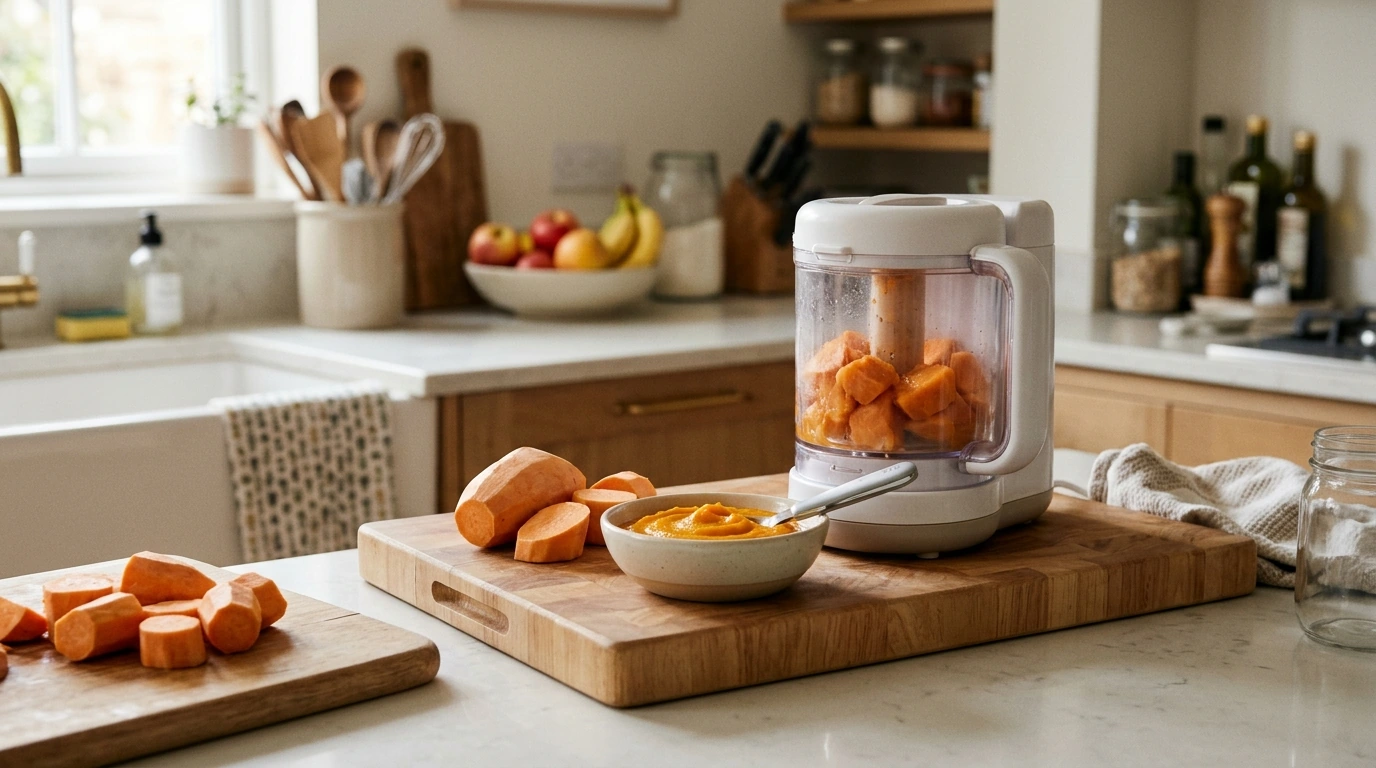
For example, you might start with a washed, peeled piece of sweet potato, cut into manageable pieces. Steam it until soft, then blend it to the consistency your baby can handle. Let the food cool to a safe temperature before offering it. As feeding skills develop, you can adjust the texture rather than relying on the same smooth preparation every time.
The appliance also has a sterilizing function. Follow the manufacturer’s instructions to determine which items are compatible and how to use that function. While the product is described as 5-in-1, our team recommends focusing on the listed steaming, blending, and sterilizing functions when planning your routine.
Getting to Know the 750ml Tritan Bowl
The 750ml Tritan bowl holds ingredients during preparation. You can choose the amount to prepare based on your baby’s appetite, the ingredients you have on hand, and whether you plan to store leftovers. There’s no need to fill the bowl for every meal; a small amount can be useful when your baby is trying a food for the first time.
Think about texture as well as quantity. A baby just starting complementary foods may need a different consistency from a child who has had more practice eating. Prepare food to suit your child’s current stage, and make changes gradually as their skills grow.
| Feature | How it fits into preparation |
|---|---|
| Steamer | Prepares ingredients until soft enough for the intended texture |
| Blender | Helps turn prepared ingredients into a suitable consistency |
| Sterilizer | Offers a sterilizing function; follow the product instructions for compatible items |
| 750ml Tritan bowl | Holds ingredients during preparation |
A Practical Meal-Prep Routine
A repeatable routine can make homemade food feel more manageable. Before you begin, wash your hands and clean the work surface and utensils. Wash ingredients thoroughly, then peel, trim, or cut them as appropriate for the food you’re preparing.
Choose an age-appropriate ingredient and steam it until it is soft enough for the texture you intend to serve. Follow the appliance instructions for adding ingredients and operating the steamer and blender. Once cooked, blend to a consistency your baby can manage. If you need to adjust the texture, do so in a way that suits the ingredient and your child’s feeding stage.
Check the temperature before serving. Food should be comfortably warm or cool, not hot. Use a clean spoon to serve your baby’s portion, and avoid saving food left in the feeding dish after your baby has eaten from it.
Refrigerate or freeze suitable leftovers promptly in clean, food-safe containers. Labeling containers with the food and preparation date can make it easier to keep track of them. For storage temperatures and timing, use the FoodSafety.gov cold food storage chart and guidance specific to the ingredients you’ve prepared.
Afterward, follow the manufacturer’s directions for cleaning the appliance and sterilizing compatible items. Don’t assume that the bowl or other parts can go in the dishwasher.
Making Homemade Meals Work for Your Family
Simple meals give you room to notice what your baby enjoys and how they handle different textures. Start with an appropriate single ingredient, then offer a variety of suitable foods as your child’s diet develops. You can prepare foods without adding salt or sugar, letting their natural flavors take the lead.
Complementary foods are generally introduced around six months, when a baby shows signs of readiness. For broader guidance, consult the World Health Organization’s complementary feeding resources. Ask your child’s healthcare professional about introducing common allergens, especially if you have questions about your baby’s individual needs.
Always supervise your baby during meals and offer food in a safe position. Avoid foods and textures that present choking risks, and adapt preparation as your child gains experience. A blender can help change consistency, but you still need to judge whether each food is appropriate for your baby.
Homemade meals are only one part of a busy day. For another part of your care routine, you can also explore our Baby Bathing Pillow.
FAQ
What can the baby food maker do?
It offers steaming, blending, and sterilizing functions and includes a 750ml Tritan bowl for holding ingredients during preparation. Follow the product instructions for operation and for items compatible with the sterilizing function.
When can a baby start eating homemade purées?
Complementary foods are generally introduced around six months, depending on your baby’s readiness. Discuss individual feeding questions with your child’s healthcare professional.
How should the baby food maker be cleaned?
Follow the manufacturer’s instructions for cleaning the appliance and sterilizing compatible parts. Don’t assume any component is dishwasher-safe.














Leave a comment