

Black & White Wooden Play Kitchen with Sink & Microwave
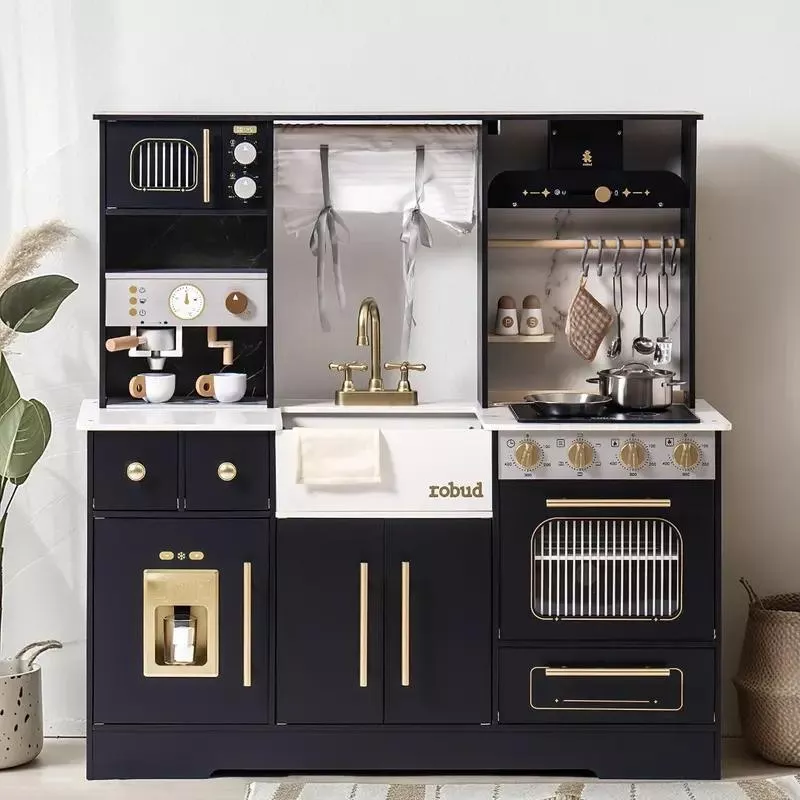
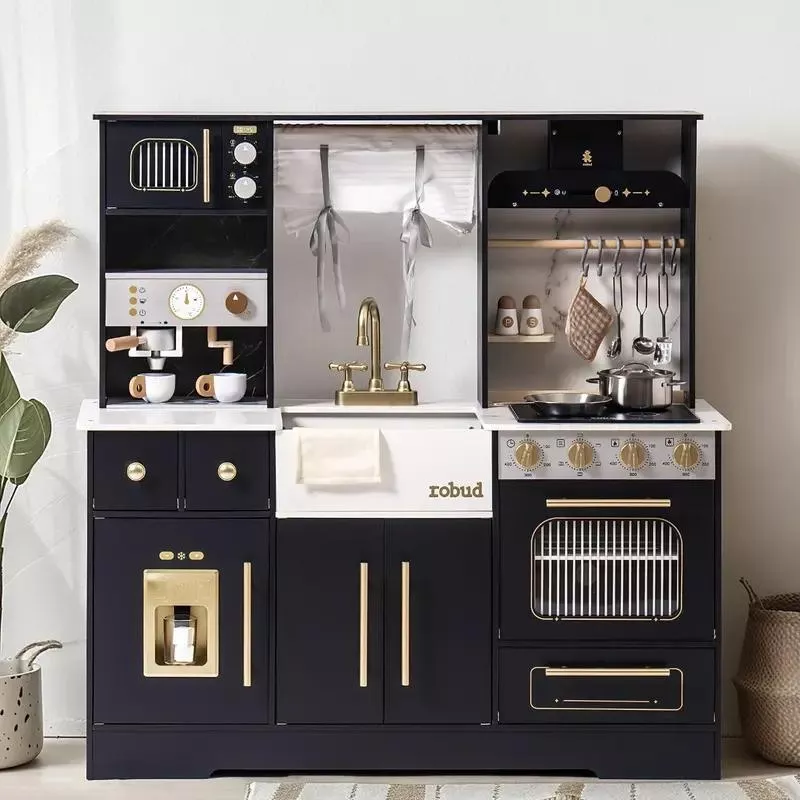
Wooden Play Kitchen Set with Wash Basin, Microwave & Cookware Accessories – Black & White
A play kitchen can become a daily hub for pretend meals, shared routines, and hands-on learning. This wooden set pairs a clean black-and-white look with kid-friendly features like a wash basin, a microwave-style compartment, and included cookware accessories—designed for imaginative play that also encourages organization, turn-taking, and early life skills. For families building a play space that feels calm, cohesive, and genuinely useful for open-ended play, a well-designed kitchen station is one of those toys that keeps earning its place. For more guidance, see 8 Best Wooden Play Kitchen Sets For Toddlers and Kids (2020 ….
What’s Included in the Set
This set is built around a sturdy wooden kitchen unit and the kind of details kids naturally copy from real life. The result is a cohesive setup that supports multiple play scenarios—cooking, washing, serving, hosting—without needing a pile of separate add-ons on day one. For further reading, see Playroom Kitchen Set Toddler Cutest Wooden Play … – legacyintl.org.
- Wooden play kitchen unit in a black-and-white color scheme
- Wash basin area for pretend dishwashing and cleanup routines
- Microwave-style compartment for role-play cooking and reheating
- Cookware accessories for serving, stirring, and pretend meal prep
- A cohesive setup that supports multiple play scenarios (cooking, washing, serving, hosting)
Quick Component Guide
| Component | Play value | Parent-friendly benefit |
|---|---|---|
| Wash basin | Pretend washing, rinsing, tidying | Encourages cleanup habits after play |
| Microwave compartment | Role-play heating and timing meals | Adds variety beyond stovetop play |
| Cookware accessories | Stirring, serving, sharing food | Reduces need to buy add-on kits immediately |
| Wooden structure | Kitchen role-play with doors and surfaces | Sturdy feel and stable play station |
Why a Wash Basin and Microwave Make Play More Realistic
Many play kitchens focus on “cooking” only. Adding a wash basin and a microwave-style compartment helps kids act out the full rhythm of everyday life: prep → cook → serve → wash. That start-to-finish flow is where pretend play becomes a repeatable routine kids return to—sometimes for years—because it mirrors what they see adults do.
- Adds “start-to-finish” routines: prep → cook → serve → wash
- Supports storytelling: kids can act out breakfast rush, café service, or family dinner
- Encourages sequencing and memory through repeated play patterns
- Creates more roles for siblings or friends (chef, server, dishwasher, customer)
- Makes it easier to introduce simple responsibility cues like “wash after cooking”
When multiple kids play together, the sink becomes a natural “second job” that keeps everyone engaged—one child can plate and serve while another rinses dishes, and someone else handles the microwave “timer.” These small role shifts can reduce squabbles because the setup offers more than one “best” role at a time.
Skills Kids Practice During Pretend Cooking
Pretend kitchens help children practice real-world skills in a low-stakes way—trying out ideas, repeating sequences, and learning social routines. Pediatric and child-development guidance consistently highlights play as a key driver of healthy development and parent-child connection (see the American Academy of Pediatrics’ overview on the power of play and the CDC’s positive parenting tips).
- Language and social skills: taking orders, describing ingredients, practicing manners, negotiating turns
- Early math concepts: counting pieces, sorting accessories, comparing “more/less,” pretend pricing
- Fine-motor development: grasping cookware, opening/closing compartments, arranging items
- Independence and confidence: making choices, completing a routine, hosting others
- Creative thinking: inventing menus, combining pretend ingredients, creating themed restaurants
A simple trick that boosts skill-building fast: add predictable phrases into play. “May I take your order?” “Your meal will be ready in two minutes.” “Let’s wash the dishes after we eat.” Repetition turns pretend scenarios into real communication practice.
Style and Placement at Home
The black-and-white design blends easily with modern playrooms, living rooms, or bedrooms, keeping the space from feeling visually cluttered. It also works well as a dedicated “station” that can anchor other play—like a market stand, a café corner, or a doll dining area.
Safety and Everyday Durability Checklist
Gift Tips: Making the First Day More Fun
For families with younger siblings nearby, pairing playtime with practical baby-care basics can simplify the day—keep essentials close while older kids are happily “busy” in their pretend kitchen. A small add-on many parents appreciate is the Baby Bathing Pillow for easier bath routines.
Wooden Play Kitchen Set – Black & White (Product Details)
Wooden Play Kitchen Set with Wash Basin, Microwave & Cookware Accessories – Black & White
At a Glance
| Detail | Value |
|---|---|
| Product | Wooden Play Kitchen Set with Wash Basin, Microwave & Cookware Accessories – Black & White |
| Price | 320.97 USD |
| Availability | In stock |
FAQ
What age is a wooden play kitchen set best for?
Many kids start showing interest in pretend kitchens in the toddler years, and the play often grows through preschool and early elementary as storytelling and social play develop. For younger children, adult supervision is helpful when small accessories are part of the setup.
How can cookware accessories be stored so they don’t get lost?
Keep a labeled bin or basket right next to the kitchen so cleanup is quick and consistent. Grouping items by type (pots in one section, utensils in another) also makes it easier for kids to notice what’s missing and reset the station on their own.
How should a wooden play kitchen be cleaned?
Use a soft cloth with mild soap and water for gentle wipe-downs, then dry the surfaces fully. Avoid harsh chemicals and soaking the wood so the finish stays looking clean and ready for frequent play.













Leave a comment