

Commercial Fry Cutter + Replacement Blades for Fast Prep
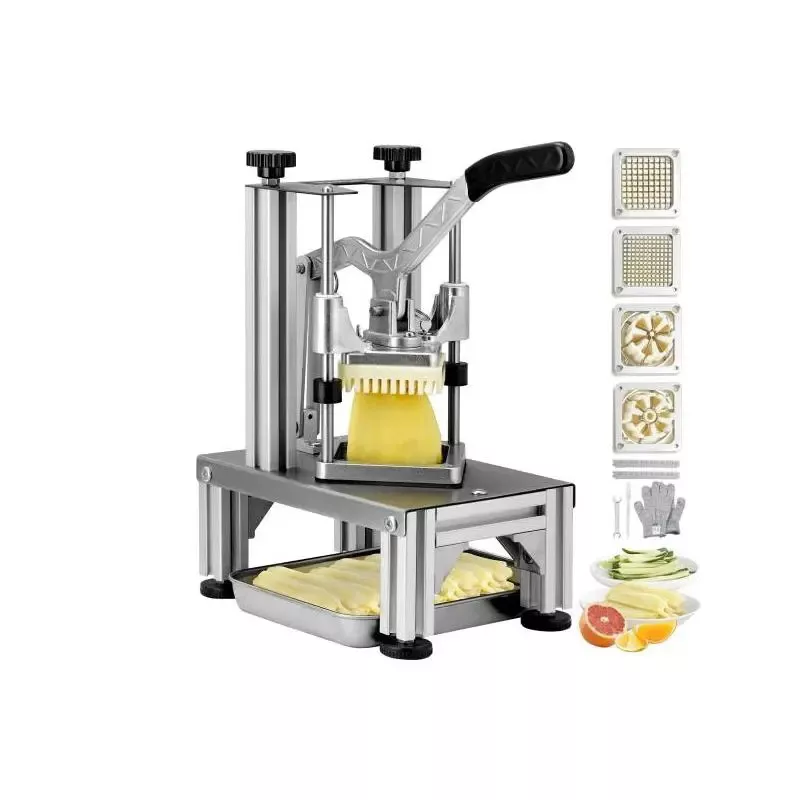
Commercial French Fry Cutter with Replacement Blades: Fast, Consistent Fries for Busy Kitchens
A commercial-grade fry cutter keeps prep moving when ticket times are tight. Instead of relying on knife skills (and the inevitable variations that come with them), a sturdy cutter produces uniform sticks that cook evenly and plate consistently. When the unit supports interchangeable replacement blades, one machine can cover multiple cut styles—while staying sharp and productive over the long haul.
Why a Commercial Fry Cutter Belongs on the Prep Line
In high-volume kitchens, potatoes are a predictable bottleneck: they take time, they’re repetitive, and they’re easy to do inconsistently when the pace picks up. A commercial fry cutter helps solve those problems in a way that’s simple to train and quick to repeat.
- Speeds up potato prep for fries, wedges, and specialty cuts without relying on advanced knife work.
- Creates uniform sticks that cook evenly, improving texture consistency and holding performance.
- Reduces repetitive slicing motions compared with hand cutting, especially during bulk prep.
- Standardizes portion size, supporting food cost control and consistent plating.
What “Replacement Blades” Actually Solve
Replacement blade sets aren’t just a convenience—they’re a practical way to protect service flow and keep output consistent when a cutter is used every day.
- Restores clean cuts when a blade dulls, bends, or chips after heavy use or accidental contact with a hard object.
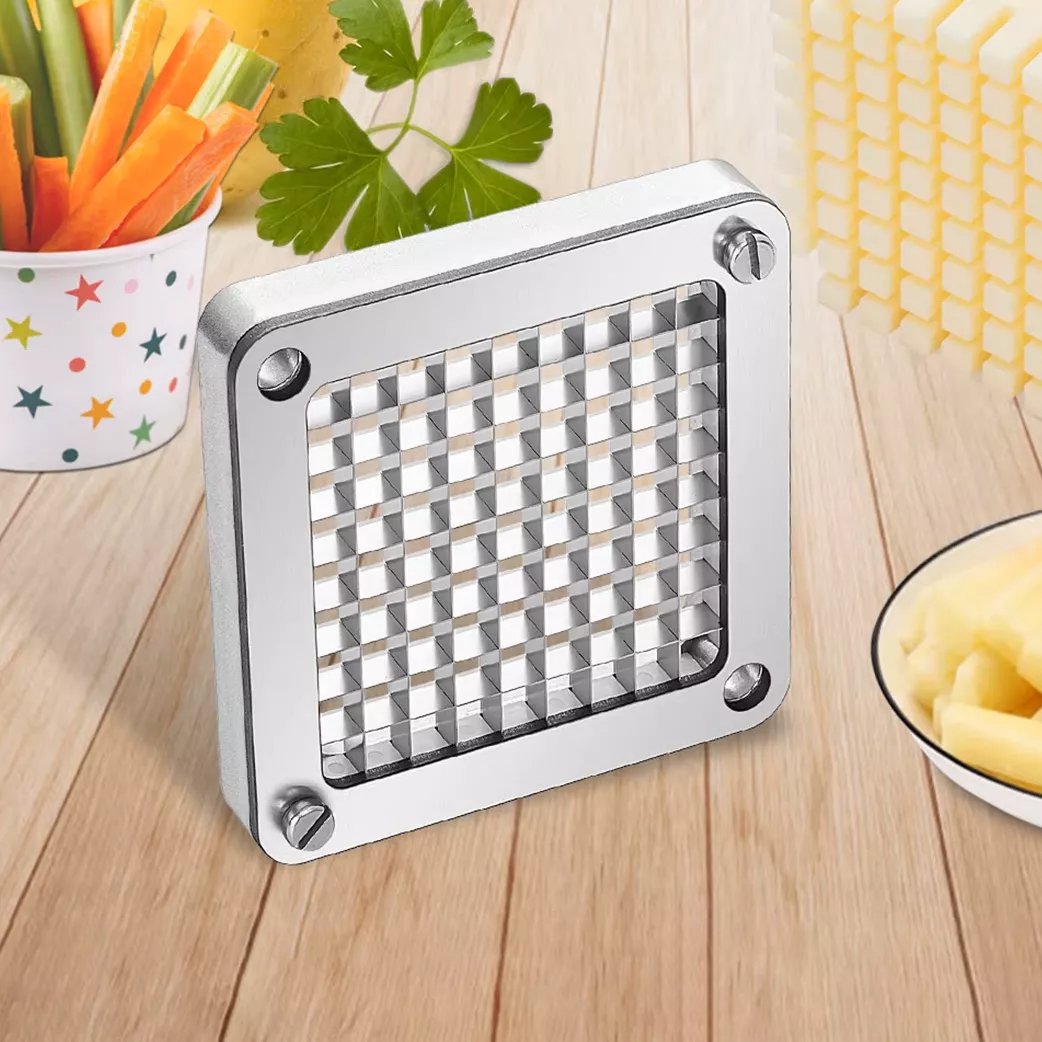
- Lets the same cutter switch cut sizes for different menu items without buying a second unit.
- Minimizes downtime: swapping a blade assembly is typically faster than sharpening, re-aligning, or fighting a damaged grid.
- Makes seasonal or limited-time menus easier (thicker cuts for steak fries or poutine, thinner cuts for classic baskets).
Key Features to Look For Before Buying
Commercial cutters look similar at a glance, but performance and longevity come down to construction details that matter during real prep shifts.
- Blade material and hardness: Stainless steel is a common choice for corrosion resistance and easier sanitation.
- Frame construction: A heavy-duty metal body with stable mounting holes or strong suction feet helps prevent shifting when you push.
- Pusher block alignment: Even, square pressure reduces jamming and keeps the cut consistent from end to end.
- Handle leverage and throw: A longer handle reduces effort; smooth travel reduces wrist strain during repetitive batches.
- Cleaning access: Removable blade grids and pusher components make wash-down faster and more thorough.
- Spare parts availability: Beyond blades, look for access to pusher blocks, springs, and hardware to extend service life.
Cut Sizes and Menu Uses
Cut size isn’t just presentation—it affects fry time, holding time, sauce coverage, and how well fries stand up to toppings. Matching the cut to the station’s fryer capacity helps maintain speed and consistency.
- Thin cuts: Crisp quickly and turn fast, ideal for high-throughput baskets—more sensitive to oil temperature swings.
- Medium cuts: A balanced choice with a crisp exterior and fluffy interior, adaptable for most menus.
- Thick cuts/wedges: A hearty bite and better structure under toppings, often with longer cook times.
- Alternative vegetables: Consistent batons for sweet potatoes, carrots, zucchini, or jicama—best results depend on firmness and sharp blades.
Common Cut Styles and Where They Work Best
| Cut style | Typical use | Operational note |
|---|---|---|
| Thin shoestring | Fast-fry baskets, higher crisp factor | Requires consistent oil temperature to avoid over-browning |
| Standard/medium | All-purpose fries, most combos | Best balance of speed, texture, and holding time |
| Thick/steak | Loaded fries, poutine, sauced applications | Longer cook time; holds structure under toppings |
| Wedges | Pub plates, shareables | Often benefits from par-cook or blanching for fluffy centers |
Setup, Mounting, and Safe Operation
A cutter is safest—and cuts best—when it’s stable. Movement during the stroke increases the chance of jams, uneven sticks, or a sudden shift that can cause injury.
- Mount on a stable prep table or wall board when possible to prevent shifting during hard pushes.
- Keep hands behind the pusher path; use the handle exclusively for leverage.
- Trim potatoes to fit the chute when needed to reduce jams and uneven pressure.
- Apply steady, straight force—twisting mid-stroke can misalign the potato and stress the grid.
- During rush periods, stage washed potatoes and keep a catch pan aligned to prevent slips and spills.
Cleaning and Maintenance That Protects the Blades
Consistent sanitation and gentle handling keep blade grids sharper longer and reduce the labor of scrubbing dried starch. For general guidance on food-contact surface cleaning and sanitizing, refer to the USDA FSIS cleaning and sanitizing recommendations and the FDA Food Code equipment cleanability principles.
Featured Option: Commercial French Fry Cutter with 4 Replacement Blades
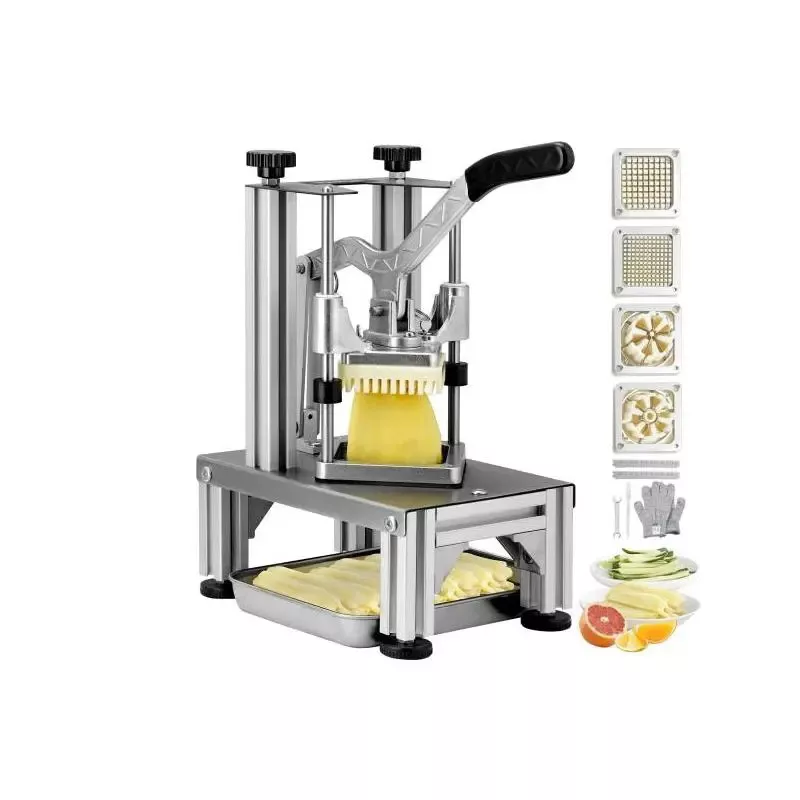
For kitchens that want one station-friendly tool with multiple outputs, the Commercial French Fry Cutter with 4 Replacement Blades is built around a simple advantage: consistent fries at speed, with blade options ready when the menu (or wear and tear) demands a change.
Other In-Stock Picks
Quick Buying Checklist for Busy Kitchens
FAQ
How often should replacement blades be changed on a commercial fry cutter?
Change blades based on performance, not a fixed schedule. Replace when cutting requires noticeably more force, fries show tearing or ragged edges, or jams start happening more often during normal use.
Can a commercial fry cutter be used for sweet potatoes and other vegetables?
Yes—especially for firm produce—so long as the blades are sharp and the pieces are trimmed to fit the chute. Very hard or irregular vegetables may need pre-trimming to reduce the chance of bending the grid or causing misalignment.
What causes a fry cutter to jam, and how can it be prevented?
Jams usually come from oversized potatoes, dull blades, a misaligned pusher block, or twisting force during the stroke. Prevent them by trimming to size, keeping blades sharp, checking alignment, and using steady, straight pressure.














Leave a comment