

Wood & Wicker Cat Tree with Basket Perch and Condo
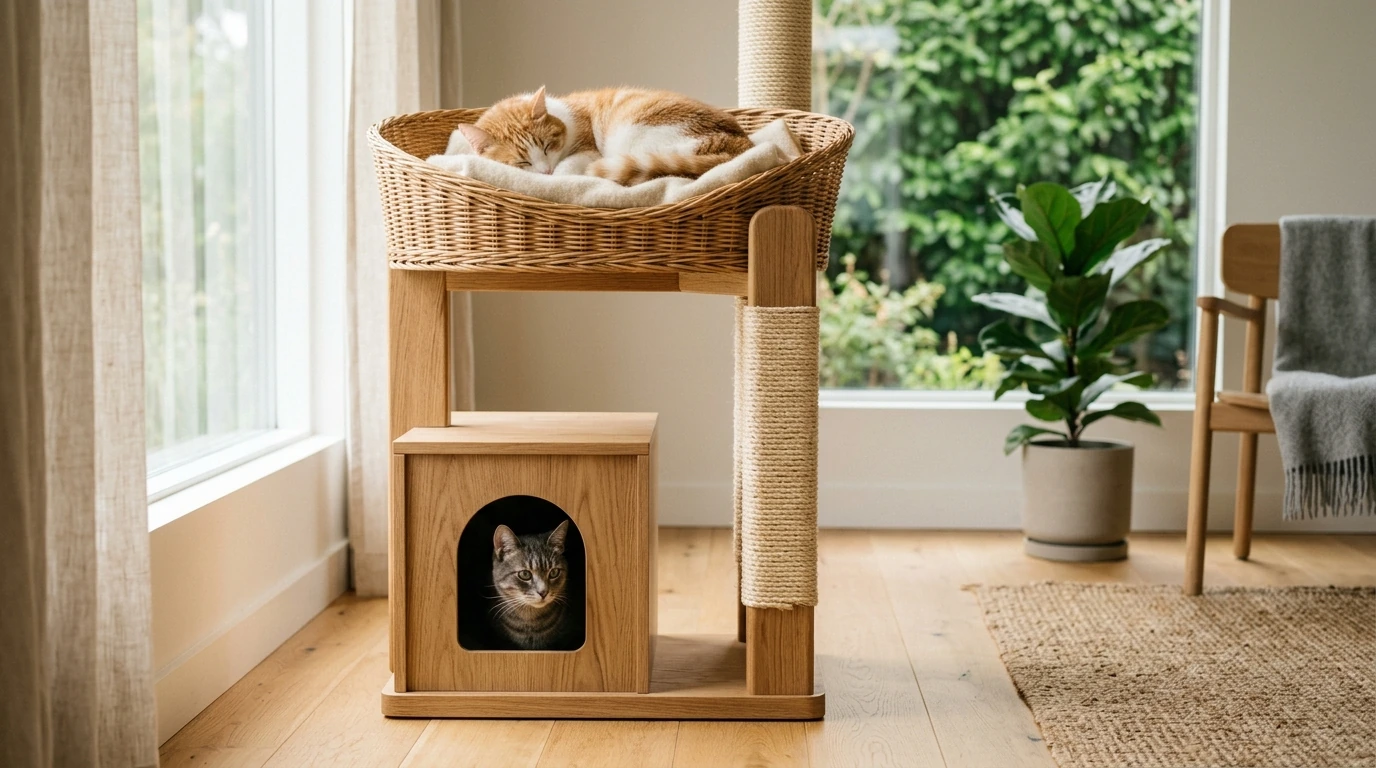
A Refined Indoor Cat Tree: Wood Frame, Wicker Basket, and a Cozy Condo
This wooden cat tree blends a clean, furniture-like look with comfort features cats naturally seek: an elevated perch in a breathable wicker basket and a tucked-away condo for uninterrupted naps. Designed for indoor life, it supports climbing, lounging, and daily scratching routines while fitting smoothly into modern living spaces.
For many indoor cats, the best setup is one that offers two essentials at once: a place to watch and a place to disappear. A wood-framed tower with a defined basket perch and an enclosed condo covers both moods—without the “carpeted cat castle” look that can clash with more minimal rooms.
What Makes This Cat Tree Feel Like Real Furniture
The difference is in the materials and silhouette. Instead of a fully carpet-wrapped tower, a wood-forward structure reads more like a side table or accent piece—clean lines, neutral tones, and a more intentional profile.
- Wood-forward structure for a polished look that blends with home furniture rather than standing out.
- Wicker basket perch adds texture and airflow, giving cats a distinct “nest” that feels secure and breathable.
- Enclosed condo creates a quiet retreat—ideal for shy cats, midday sleeping, or households with frequent activity.
- Decor-friendly design that works in living rooms and bedrooms without dominating the space.
- Supports natural behaviors like perching, hiding, surveying, and resting in one compact footprint.
Comfort Zones Cats Actually Use
Cats don’t just want “soft.” They want choice—especially the choice between being elevated and being tucked away. That’s why a basket perch plus a condo often gets more daily use than a single open bed on the floor.
- Basket perch: Elevated resting helps many cats choose the tree over sofas and counters, especially when the perch feels like a defined, cradled spot.
- Condo hideaway: A sheltered nook can reduce stress by giving cats a predictable place to nap and decompress.
- Multi-level access: Cats can switch between “observe” and “retreat” modes throughout the day without leaving their safe zone.
- Placement tip: Position the tree near a window for enrichment—sun patches, birds, and neighborhood sounds—while keeping indoor safety intact.
For a deeper look at what indoor cats need from their environment, the American Association of Feline Practitioners (AAFP) Feline Environmental Needs Guidelines and International Cat Care’s enrichment guidance outline why vertical space, resting locations, and predictable safe areas matter.
Safety, Stability, and Where It Works Best at Home
A cat tree becomes a daily launchpad, so stability and placement matter as much as style. The goal is to make jumping on and off feel effortless while minimizing wobble or collisions.
- Start with a flat surface and enough clearance for comfortable takeoffs and landings.
- For active cats, use a wall or corner to reduce side-to-side movement from fast leaps.
- Avoid fragile zones like glass shelves, tall vases, or narrow hallways with heavy foot traffic.
- For hesitant cats, “seed” the condo with a familiar blanket or a small pinch of catnip near the entrance to make the first approach feel safe.
If your cat is already scratching furniture or pacing for stimulation, adding a stable vertical zone can help. The ASPCA’s cat care resources offer practical pointers on enrichment, scratching, and behavior needs for indoor cats.
Scratching and Climbing: Supporting Daily Needs
Scratching isn’t “bad behavior”—it’s maintenance, marking, and stress relief. A dedicated cat tree helps give that instinct an appropriate target while also building a routine around the tree as the best place to hang out.
- Redirects scratching away from rugs and upholstery when the tree becomes the default scratch-and-stretch station.
- Encourages low-impact exercise through vertical movement, which supports both physical fitness and mental stimulation.
- Boost early adoption by rewarding the first few climbs and making the perch the “best seat” (near light, warmth, or a view).
- For multi-cat homes, reduce tension by adding extra resting spots nearby so one cat can’t monopolize the tree.
At-a-Glance Details
Quick Comparison Checklist
| Feature | Why It Matters | Best For |
|---|---|---|
| Wood frame | Looks integrated with home furniture and can feel sturdier than fully carpeted builds | Design-conscious homes, everyday indoor use |
| Wicker basket perch | Breathable, defined lounging spot that many cats prefer for naps | Cats that like elevated resting and window views |
| Enclosed condo | Creates a private retreat and helps reduce stress in busy homes | Shy cats, multi-pet households, daytime sleepers |
| Multi-level layout | Adds movement and enrichment without needing outdoor access | Indoor cats needing stimulation and exercise |
Care and Cleaning Tips for Wood and Wicker
Who This Style Suits Best
Shop In-Stock Picks
- Luxury Wooden Cat Tree with Wicker Basket and Cozy Condo for Indoor Cats
- Baby Bathing Pillow
- Low Waist Cargo Pants
FAQ
Will cats actually use the wicker basket perch?
Most cats are drawn to elevated, defined perches because they feel secure and let them rest while keeping an eye on the room. Place the tree near a window, add a familiar blanket, and use a few treats or a pinch of catnip for the first few days to build a positive routine.
Is an enclosed condo better than an open bed for indoor cats?
An enclosed condo supports security and deeper rest, especially for shy cats or homes with other pets and frequent activity. Having both an open perch and a hideaway is ideal, since cats often switch between wanting visibility and wanting privacy.
How often should a wooden cat tree be checked for stability?
Do a quick check about once a month, and also after moving the tree or noticing extra wobble. Keeping it on a level surface and positioning it near a wall or corner can add stability for cats that jump hard.













Leave a comment