

Wooden Tool Bench Play Ideas for Little Builders
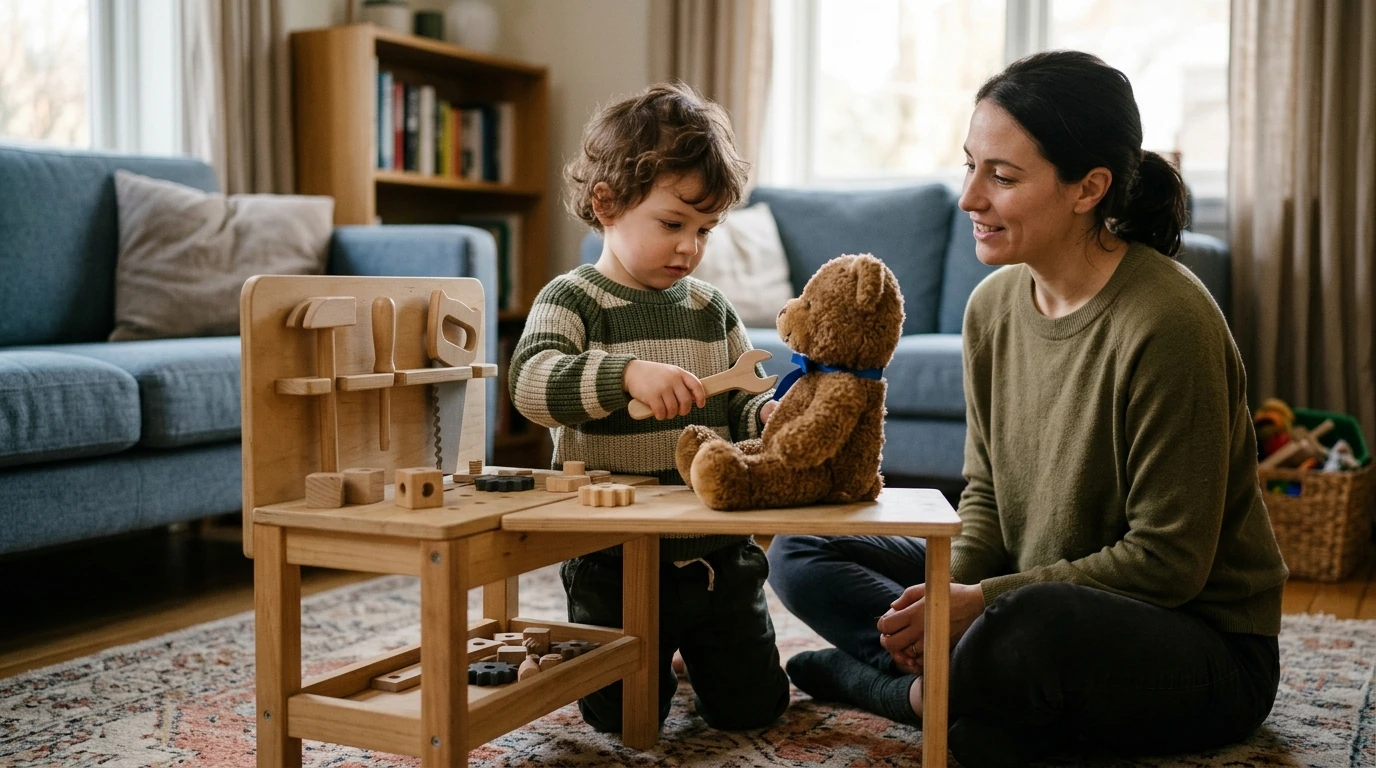
“What shall we build today?” That simple question can turn an ordinary afternoon into a repair call, a busy workshop, or a construction project for a favorite stuffed animal. Our Mini Wooden Tool Bench Set for Kids gives children a construction-themed place to begin. The best part is that no one needs a blueprint: you can follow your child’s idea and let the story take shape together.
Start with a job worth imagining
Try offering one familiar task: “This chair is wobbly,” “The bear needs a house,” or “We’re making a surprise gift.” Then ask what your child wants the finished project to be. A pretend repair might become a complete room makeover; a house might turn into a castle. Both are perfectly good days at the workbench.
We like to treat the bench as a starting point, not a set of instructions. One short question gives a child room to make decisions about the job, the customer, and what happens next. If they change the plan halfway through, you can change roles with them. A toy that arrived for a repair may leave as the proud owner of a brand-new imaginary garage.
Small play ideas with plenty of room to grow
These three projects work when you have ten minutes to play, and they can keep going if your child has more to say. You don’t need to introduce a new toy each time the workshop opens. Changing the customer or the job can make a familiar setup feel fresh.
| Play idea | Opening question | Ways to practice |
|---|---|---|
| Home repair visit | Which toy needs help today? | Explaining a problem and planning what to do |
| Toy-building workshop | What could we make for a favorite character? | Making choices and telling a story |
| Two-person construction crew | Which job would you like to take? | Taking turns and working together |
Make a house call
Invite a toy “customer” to explain what has gone wrong. You can play the customer while your child runs the repair shop, then switch if they want a turn describing the problem. Ask, “What needs fixing?” and let their answer guide the visit. The job can end with a quick “All done!” or grow into a series of calls around the room.
Open a toy-building workshop
Ask what a favorite character needs today: a pretend house, a place to park, or a gift for a friend. Your child can announce the plan, revise it, and present the finished imaginary project. There is no physical object to complete and no answer to get right; the story is the project.
Work as a crew
Give yourselves roles such as planner and helper, or builder and customer. “What should we do next?” is useful when the story pauses, while “Is it ready?” gives your child a chance to decide when the job is finished. On another day, swap roles and see how the same project changes.
Make learning feel like play
Pretend building creates natural openings for conversation. A child might name what they’re doing, describe a plan, put ideas in order, or decide what to change when an imaginary design doesn’t work. You can join in without turning play into a lesson: “You tried a different way” leaves more room for a response than judging whether the project was done correctly.
If your child takes the story somewhere unexpected, follow along. A “repair” may become a delivery, and a construction crew may need to rescue a toy animal. Our team values that flexibility because it keeps the child’s ideas at the center. For broader guidance on the role of play in early childhood, explore NAEYC’s play resources. If you have questions about development more generally, the CDC’s developmental milestones offer age-based information; no particular play session or toy guarantees a developmental outcome.
Set up for comfortable, supervised play
Choose a clear, stable play surface and leave enough space for your child to move around the bench. Moving unrelated toys out of the immediate work area can make it easier to focus on the pretend job—and easier to gather everything afterward. Before play, review the product packaging and instructions for age guidance, included parts, and care directions. Supervise in a way that fits your child’s needs.
A closing routine can be part of the game. Announce that the workshop is shutting for the day, gather the set’s pieces together, and ask which project should go on tomorrow’s schedule. If the answer changes by morning, the workshop can change with it.
Bring the workshop home
For families who enjoy construction-themed pretend play, the Mini Wooden Tool Bench Set for Kids is our featured place to start. You can explore its product page for current details and availability. And if you’re browsing our store for a different part of family life, our Baby Bathing Pillow is a separate option for bath-time routines, not a workbench accessory.
FAQ
What can kids pretend to build with a tool bench?
They can imagine a toy house, run a repair shop, or make a gift for a stuffed animal. The story matters more than producing a finished object.
How can adults join tool bench play without taking over?
Ask one open-ended question, accept your child’s plan, and take a supporting role such as customer or helper. Let them decide when the project changes or ends.
How do I know whether this set is suitable for my child?
Review the packaging and instructions for age guidance and included parts, then supervise play according to your child’s needs.















Leave a comment