

Laser Pointers for Cats: Benefits, Safety & Play Time
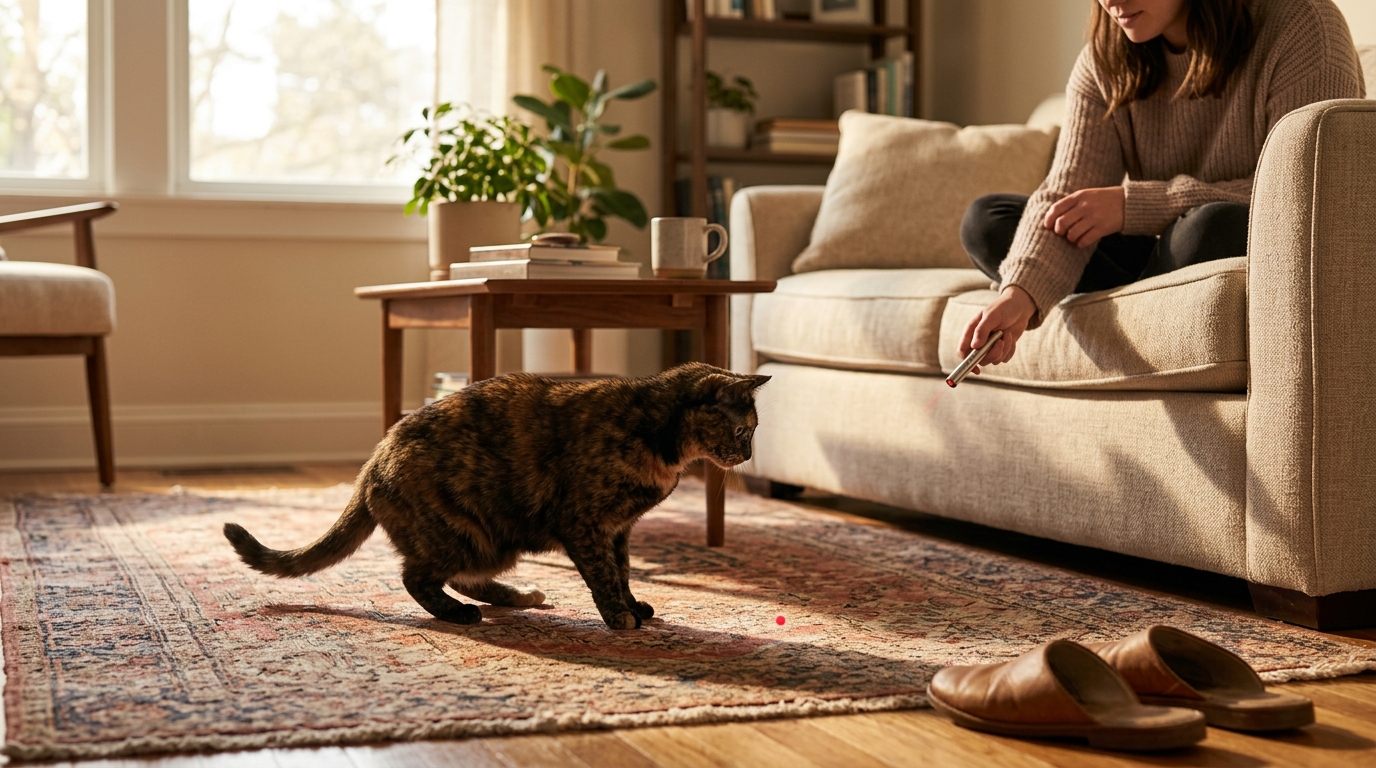
Are lasers good stimulation for cats?
Laser play can be great stimulation for many cats because it taps into their natural chase-and-pounce instincts. The quick, unpredictable movement encourages running, stalking, and bursts of activity—especially helpful for indoor cats that need more daily exercise and mental engagement.
That said, lasers work best when they’re used thoughtfully. Because a cat can’t actually “catch” a dot of light, some cats may become frustrated if play ends abruptly. The simplest fix is to “complete the hunt” by guiding the dot toward a tangible toy or a treat at the end of the session so your cat gets a satisfying payoff.
Benefits of laser stimulation
Laser toys can provide fast enrichment in a small space, making them useful for apartments or busy days. They can also help reduce boredom-related behaviors by adding an interactive routine. For cats that are hesitant to play with other toys, a laser can be an easy way to spark interest and movement.
How to use a laser safely and effectively
Keep sessions short (often 5–10 minutes) and let your cat take breaks. Avoid shining the laser in your cat’s eyes or reflecting it off mirrors or glossy surfaces. End on a “win” by switching to a kicker toy, tossing a plush mouse, or placing a treat where the dot “lands,” then let your cat grab it.
If you want ideas on building a consistent play routine and choosing an automatic option for hands-free sessions, see the main guide here: USB Rechargeable Automatic LED Laser Cat Toy Guide.
For Laser Pointers for Cats: Benefits, Safety & Play Time, the best answer depends on fit, material, care instructions, and how the product will be used day to day.
Checking those details first helps avoid a poor match and keeps the choice practical after delivery.
FAQ
How long should you play with a laser pointer with a cat?
Most cats do well with 5–10 minute sessions, once or twice daily. Stop earlier if your cat starts panting, gets overstimulated, or loses interest.
















Leave a comment