

Slim Entryway Shoe Cabinet: 3 Flip Drawers, Adjustable
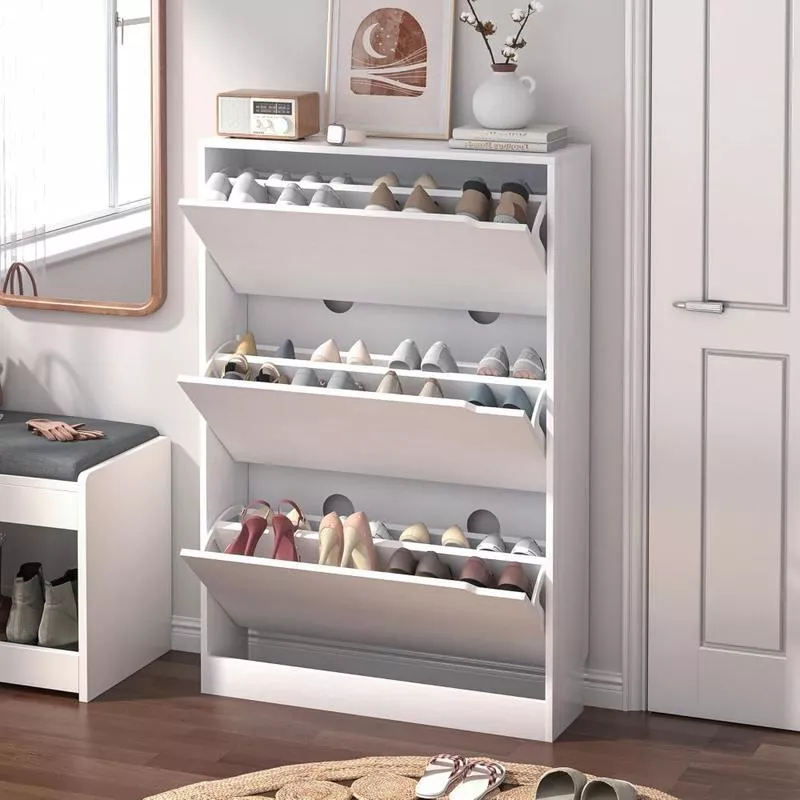
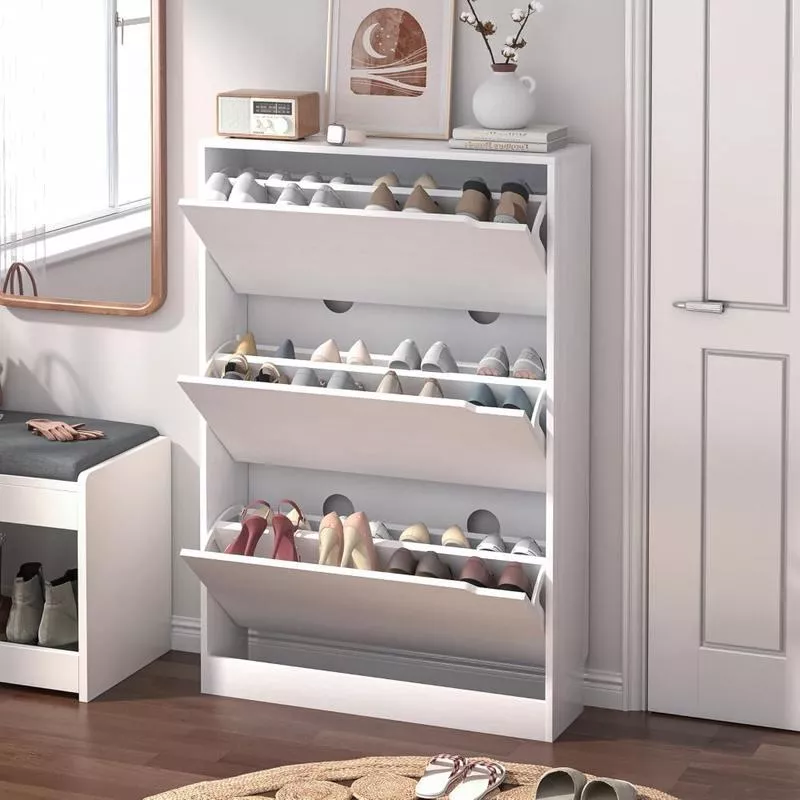
Shoe Cabinet Storage for Entryway with Flip Drawers and Adjustable Shelves
A tidy entryway starts with storage that fits the way shoes actually pile up—pairs used daily, seasonal boots, and everything in between. A slim shoe cabinet with flip drawers keeps floors clear, reduces visual clutter, and makes it easier to grab the right pair on the way out. This guide breaks down what to look for, how flip-drawer cabinets work, and how to set one up for smoother daily routines.
Why flip-drawer shoe cabinets work well in entryways
Entryways tend to be narrow, high-traffic spaces where piles build up fast. Flip-drawer cabinets solve the most common problems—crowded floors, tripping hazards, and “where’s my other shoe?” moments—without requiring a big footprint.
- Keeps shoes concealed while maintaining quick access—ideal for front doors, hallways, and apartment landings.
- Uses vertical space efficiently; flip drawers store pairs at an angle to reduce the footprint versus open racks.
- Helps limit dust buildup and pet access compared with open shelving.
- Creates a defined “drop zone” feel, making entryways look more intentional and less crowded.
Product highlight: 3 flip drawers with adjustable shelves (white)
If the goal is a cleaner-looking entry that still stays practical for daily grab-and-go, a cabinet with multiple flip drawers and adjustable interiors is a strong middle ground between open racks and deep closets.
- Three flip drawers separate pairs by owner, season, or frequency of use for faster routines.
- Adjustable internal shelving makes it easier to accommodate mixed footwear—sneakers, flats, some ankle boots, and bulkier pairs depending on sizing.
- Enclosed cabinet style supports a clean, minimal look in an entryway or mudroom.
- White finish brightens narrow hallways and blends with many wall colors and trim styles.
- Best placement: near the primary exit path with enough clearance to open flip drawers without blocking door swings.
Shoe Cabinet Storage for Entryway – 3 Flip Drawers, Adjustable Shelves, White
At-a-glance fit check for entryway shoe storage
| Need | Why it matters | What to look for in a flip-drawer cabinet |
|---|---|---|
| Small footprint | Prevents tight entryways from feeling cramped | Slim depth, vertical storage with multiple drawers |
| Flexible capacity | Households often store mixed shoe types | Adjustable shelves or configurable dividers |
| Easy daily access | Reduces shoe piles and last-minute searching | Smooth-opening flip fronts and logical drawer layout |
| Cleaner look | Helps the entryway feel organized | Closed-front drawers and consistent finish |
Measuring and placement: getting the layout right
Flip drawers are simple to use, but the cabinet still needs the right home. A few quick measurements can prevent the most common setup headaches—blocked doors, cramped walkways, or drawers that can’t fully open.
- Measure the available wall width and the depth of the walkway; confirm the flip drawers can open without creating a pinch point.
- Check door swing radius (front door, closet doors, and adjacent interior doors) and keep the cabinet outside of swing paths.
- Leave breathing room above the cabinet if adding a mirror, key hooks, or a small tray for essentials.
- If placing on tile or hardwood, consider felt pads or a thin mat nearby to reduce scuffing and tracked-in grit.
For a cohesive “entry station,” it can help to pair shoe storage with outerwear organization. A warm layer kept near the door cuts down on last-minute closet digging—especially during colder months. If you’re building out that zone, consider adding a hanging spot nearby for a go-to jacket like autumn-womens-coat.
Organizing shoes inside flip drawers
A flip-drawer cabinet works best when it’s arranged around how people actually move through the day. The goal is to reduce decisions at the door—each drawer should have a clear “job.”
- Group by frequency: daily pairs in the most convenient drawer, occasional pairs higher or lower depending on household habits.
- Use adjustable shelves to separate slimmer shoes from bulkier pairs; keep toe boxes from compressing to reduce creasing.
- Rotate seasonally: move boots and heavier shoes to less convenient positions during warm months and swap back in colder months.
- Add simple labels inside drawer edges (not visible from the outside) to keep organization consistent for families or roommates.
One practical routine: keep “out-the-door” shoes (work sneakers, flats, walking shoes) in the middle drawer at hand level, and reserve the top/bottom drawers for less-used pairs. That layout tends to hold up well even when the entryway gets busy.
Care and maintenance for a cleaner entryway
Because flip-drawer cabinets are enclosed, they can keep the entry looking neat—but they also benefit from simple habits that reduce moisture and odor over time.
For general odor-control best practices, see the guidance from the American Cleaning Institute. And if your entryway tends to stay damp (snowy boots, rainy umbrellas, poor ventilation), basic moisture control matters; the EPA’s mold resources are a helpful reference for keeping indoor areas drier and cleaner.
Styling ideas: making the cabinet look intentional
FAQ
How many pairs of shoes can a 3 flip-drawer cabinet hold?
Capacity depends on shoe size and bulk, but a three-drawer flip cabinet commonly holds around 12–18 pairs for flats and sneakers, with fewer pairs if you store larger men’s shoes or chunky footwear. Adjustable shelves help you trade “pairs per drawer” for better fit when you have mixed styles.
Do flip drawers work for boots?
Ankle boots may fit if the drawer height and shelf position allow, especially slimmer styles. Tall boots usually won’t fit in standard flip drawers, so it’s often best to reserve a drawer for bulkier pairs and store tall boots elsewhere.
What’s the best way to prevent odor in enclosed shoe storage?
Dry shoes fully before putting them away, especially after rain or workouts, and wipe the inside surfaces occasionally to remove dust. Cedar or charcoal odor absorbers also help keep enclosed drawers smelling fresher between cleanings.










Leave a comment